AquariumFish.com
Freshwater fishL-183 Starlight Bristlenose Pleco
L-183 Starlight Bristlenose Pleco
Couldn't load pickup availability
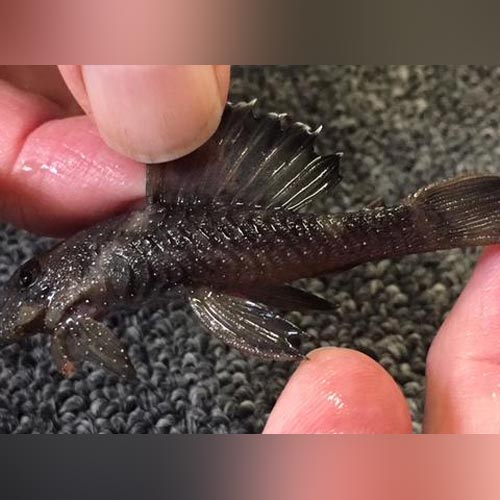
The L-183 starlight pleco is sometimes referred to as the L-181 peppermint pleco. This is not the L-59 peppermint pleco; this one has a darker black body with a pretty cream fringe on the fins when the fish matures. This pleco comes from Brazil and grows to about eight inches. The dark body with the contrasting white spots and light-colored fringe on the dorsal fin make this a beautiful addition to the aquarium. Starlight plecos are omnivores and will scavenge, but it is best to also add some sinking pellets to their diet. Like most plecos, the starlight pleco will be compatible with nearly all species except extremely small shrimp and similar creatures. Pictured is a three-inch pleco. As the fish matures, the white fringe and spots become more pronounced. Google images generally show a fish that is mature and fully colored.
Quick Facts
| Scientific Name | Ancistrus sp. (L-183) |
| Origin | Rio Negro, Brazil |
| Care Level | Easy, good for beginners |
| Temperament | Peaceful (males guard caves) |
| Adult Size | Up to 5–6" |
| Lifespan | 10–12 years |
| Diet | Herbivore (algae and plant-based foods) |
| Water Temperature | 72–82°F |
| pH | 5.5–7.0 |
| Group Size | Single, pair or group with a cave each |
| Shipping Size | Approx. 1¼" |
Care Guide
Tank setup: Bristlenose plecos do well in most community tanks. Give them driftwood to rasp on, caves or hiding spots, and good filtration. They keep glass, rocks and plants clean of algae.
Feeding: They graze on algae, but also feed algae wafers.
Tankmates: Bristlenose plecos get along with nearly all community fish, plus shrimp and snails. Avoid large aggressive fish that might harass them.
Good to know: Males grow larger, bushier "bristles" on the snout than females. Bristlenose plecos stay small and are one of the best algae-eaters for home aquariums.
Share