AquariumFish.com
Freshwater fishSiberian Sturgeon
Siberian Sturgeon
Couldn't load pickup availability
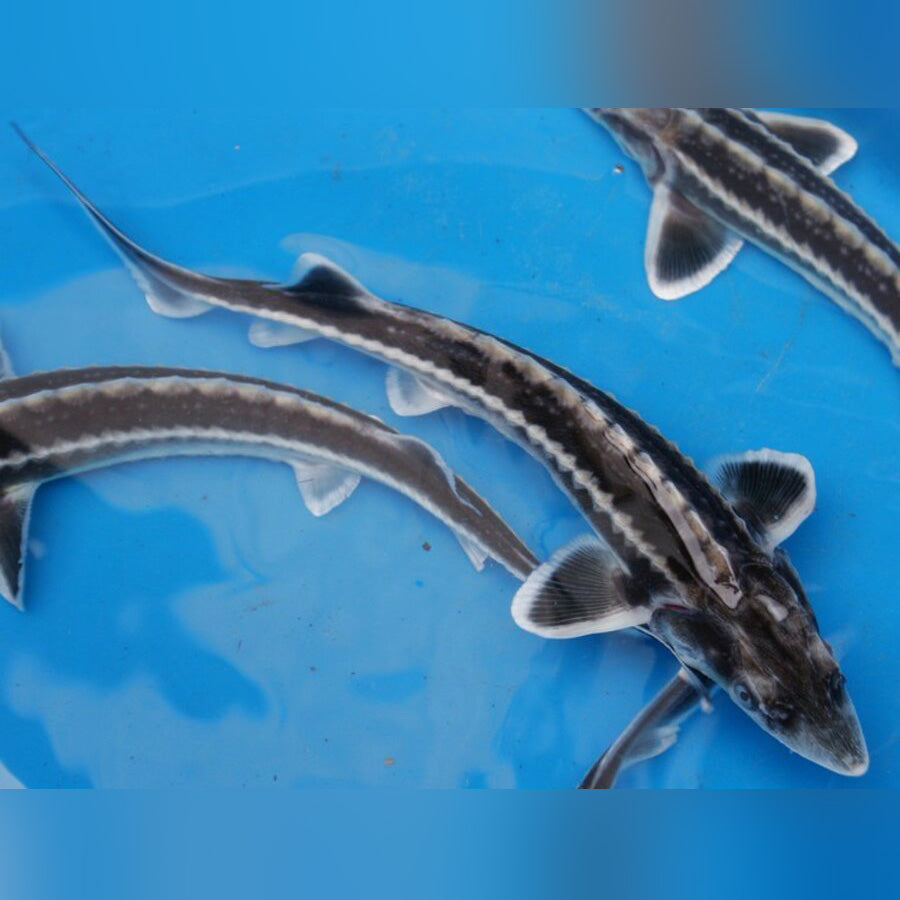
This fish is for an exclusive club. The largest and most ancient fish species is the sturgeon fish. Smaller than some of its cousins, the Siberian sturgeon is suitable for ponds with an area that does not get much over 75 degrees, or super large aquariums. And suitable for caviar, though the caviar will have to wait a few years. These fish take a long time to grow to maturity and can outlive the owner (if the owner is as old as this writer). Research, research, and be ready if you want to invest in this rare and exotic species. Though endangered in Central Asia due to overpopulation and loss of habitat, these fish are pond raised in Florida and plentiful.
Quick Facts
| Scientific Name | Acipenser baerii |
| Origin | Siberia and Central Asia (pond-raised in Florida) |
| Care Level | Difficult (grows very large) |
| Temperament | Peaceful |
| Adult Size | Up to 6 feet in the wild; much smaller in ponds |
| Lifespan | 30+ years |
| Diet | Carnivore (sinking pellets) |
| Water Temperature | 50–74°F |
| pH | 7.0–7.8 |
| Group Size | Single or group |
| Shipping Size | Approx. 6" |
Care Guide
Tank setup: Sturgeon are cold-water fish best suited to large outdoor ponds with cool, very clean, well-oxygenated water and a smooth bottom. They do not do well in warm water.
Feeding: Feed sinking sturgeon pellets once a day. Sturgeon feed from the bottom and cannot reach floating food.
Tankmates: Sturgeon are peaceful and get along with koi and other pond fish, but they can be outcompeted for food, so make sure food sinks to them.
Good to know: Sturgeon have no scales, just rows of bony plates, and belong to one of the oldest groups of fish on Earth.
Share