SLA
Saltwater invertebratePink Margarita Snail
Pink Margarita Snail
Couldn't load pickup availability
Pink Margarita Snail: The Small, Temperate Algae Grazer
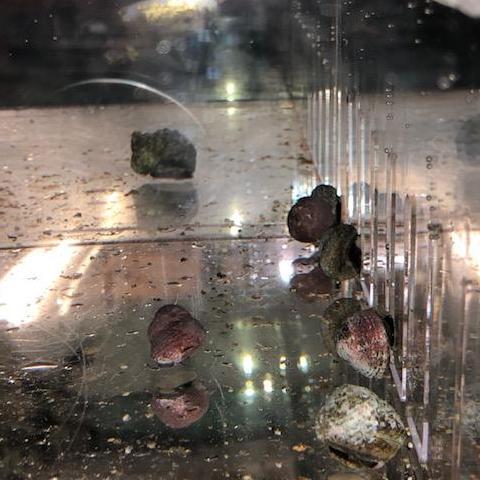
The Pink Margarita Snail, which is the shell of the Mexican Turbo Snail (Turbo fluctuosus) or a similar species like the Margarita Snail (Margarites pupillus) covered in pink/purple coralline algae, is a highly effective, though delicate, member of the marine cleanup crew. It is highly valued for its voracious appetite for nuisance algae, including film algae and diatoms, on aquarium glass and rockwork.
While often sold as a tropical reef animal, the common Mexican Turbo Snail (Turbo fluctuosus) and the true Margarita Snail (Margarites pupillus) are generally collected from the cooler, temperate waters of the Eastern Pacific (from Baja California to California). While they can tolerate standard reef temperatures (76−78∘F) for a period, constantly high temperatures will significantly increase their metabolism and shorten their natural lifespan (often to 1-2 years). For optimal long-term health, a slightly cooler tank is preferred, but this is often impractical in a mixed-reef environment.
These snails are primarily nocturnal and are peaceful, making them entirely reef safe. They are, however, sensitive to sudden changes in water chemistry and cannot tolerate copper-based medications.
Diet & Compatibility:
- Diet: This snail is a dedicated Herbivore and primary grazer. It aggressively consumes various types of algae, including film algae, diatoms, and green hair algae.
- Feeding in Captivity: Due to their large appetite, they can quickly deplete the algae in a home aquarium. If the natural algae supply runs low, their diet must be supplemented with dried seaweed (nori), algae wafers, or vegetable-based pellets to prevent starvation. Pitting or flaking on the shell is a sign of calcium deficiency or poor water quality.
- Reef Compatibility: It is Reef Safe. It poses no threat to corals or motile invertebrates. However, large snails (2 inches +) are sometimes clumsy and may accidentally knock over unsecured coral frags or lightweight rockwork.
- Temperament: Peaceful. They are vulnerable to predators, including predatory fish (puffers, triggers, large wrasses), and aggressive invertebrates, particularly large hermit crabs.
- Acclimation Note: Like all marine invertebrates, they are highly sensitive to fluctuations in pH and Salinity. Drip acclimation is essential for their survival.
- Movement Note: Turbo Snails have difficulty righting themselves if they fall upside-down on a flat sand bed. If you see one overturned, you must manually flip it over to prevent it from starving or being attacked.
Quick Facts
- Scientific Name (Commercial): Turbo fluctuosus(often) or Margarites pupillus
- Primary Common Name: Pink Margarita Snail
- Other Common Names: Mexican Turbo Snail, Turbo Grazer, Cat Eye Snail
- Origin: Eastern Pacific (Temperate/Sub-Tropical)
- Max Size: 1 to 3 inches (2.5−7.5 cm) depending on species
- Temperament: Peaceful
- Diet: Herbivore (Voracious algae grazer)
- Minimum Tank Size: 10 Gallons
- Reef Compatibility: Yes (Excellent cleanup crew)
- Temperature Consideration: Prefers cooler water (72−76 ∘ F) for longevity; shorter lifespan in higher reef temperatures (78 ∘ F+).
Share