AquariumFish.com
Freshwater fishPanda Oranda Goldfish
Panda Oranda Goldfish
Couldn't load pickup availability
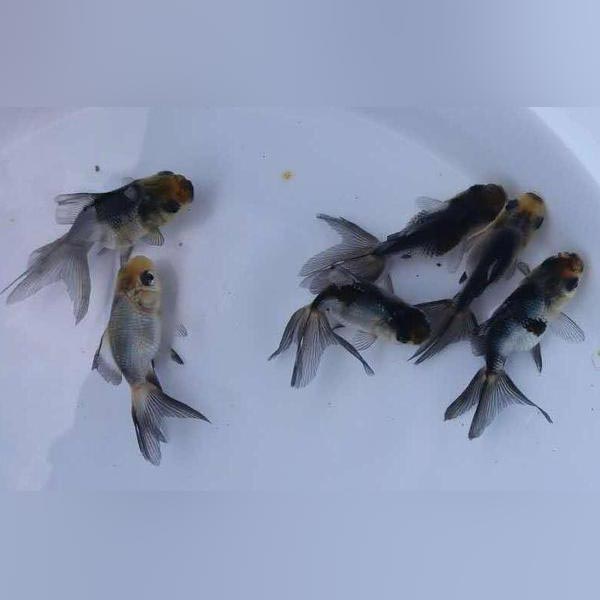
Once in a blue moon, a natural Grade A black and white Panda Oranda is born. Grade A Panda Orandas command a very high price, tenfold more than Grade B Panda Orandas, and have dramatic solid white and black color and no red. Unfortunately, nearly all Grade A Panda Orandas are sold to the Asian market and are not available to the USA market. What we get is pictured below: a silvery black and off-white oranda with a small amount of orange. But with a little imagination, one can see the resemblance to the panda bear.
Note: Our stock of Orandas is young and does not have the developed wen seen in the images. The wen develops when they mature.
Quick Facts
| Scientific Name | Carassius auratus |
| Origin | China |
| Care Level | Easy, good for beginners |
| Temperament | Peaceful |
| Adult Size | Up to 8" |
| Lifespan | 10–15 years, often longer with good care |
| Diet | Omnivore |
| Water Temperature | 65–75°F (no heater needed in most homes) |
| pH | 7.0–8.0 |
| Shipping Size | Approx. 2–4" |
Care Guide
Tank setup: Orandas produce a lot of waste, so give them plenty of room and a strong filter.
Feeding: Feed small amounts of a quality sinking pellet or flake once or twice a day, only as much as they eat in a couple of minutes. They also enjoy frozen foods like bloodworms and brine shrimp.
Tankmates: Keep them with other fancy goldfish of similar size and speed. Avoid fast single-tail goldfish like comets and shubunkins, which will outcompete them for food. Also avoid tropical fish, which need warmer water, and fin-nippers.
Ponds: Orandas can live in ponds in mild climates, but they are less cold-hardy than comets and shubunkins. Bring them indoors where winters are harsh, and keep them away from fast, aggressive pond fish.
Good to know: The wen (crown) keeps growing for the first couple of years and can trap debris, so clean water is the key to a healthy, full wen.
Share