AquariumFish.com
Freshwater fishManacapuru Red Shoulder Angelfish
Manacapuru Red Shoulder Angelfish
Couldn't load pickup availability
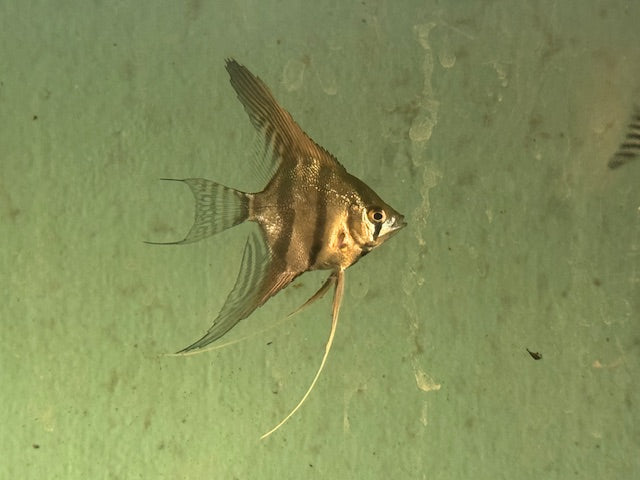
The rare "ish" manacapuru red shoulder angelfish comes from a very small area of Venezuela and Brazil and features orange to red shoulders on a silver stripe body. These angelfish will adapt more easily than altum angelfish and will accept pellet, flake food, frozen and live food. Manacapuru are the same species as the common wild silver angelfish, just with a few added genes. pH should not be above 7.5, and these fish will look amazing among live plants. Look for the red shoulder to begin appearing as the fish ages to about three inches. Pictured is a juvenile medium angelfish; a full adult male ready to mate will feature the brighter orange shoulder, but expect something more subtle the first year (unless it's a full-grown male ready to mate, of course).
Quick Facts
| Scientific Name | Pterophyllum scalare (wild form) |
| Origin | Brazil (Manacapuru, Amazon basin) |
| Care Level | Moderate |
| Temperament | Semi-aggressive (territorial when pairing) |
| Adult Size | Up to 6" long and 8–10" tall |
| Lifespan | 10+ years |
| Diet | Omnivore |
| Water Temperature | 78–84°F |
| pH | 5.5–7.0 |
| Shipping Size | Approx. 2" |
Care Guide
Tank setup: Give them a heater, gentle filtration, driftwood and tall plants. Wild-type angels do best in soft, slightly acidic water.
Feeding: Feed small amounts once or twice a day. Many wild angels learn to take flake and pellets once settled. They also enjoy frozen foods like bloodworms and brine shrimp.
Tankmates: Choose calm fish that like soft, warm water and are too large to swallow, such as larger tetras, corydoras and peaceful dwarf cichlids. Avoid fin-nippers and boisterous fish.
Breeding: Angelfish pair off and lay eggs on flat surfaces like broad leaves or slate. A breeding pair can become territorial, so give them room and places for other fish to retreat.
Good to know: Wild-type angelfish are more sensitive than tank-bred angels. Acclimate them slowly and keep the water soft, warm and very clean.
Share