
AquariumFish.com
Freshwater fishBuenos Aires Tetra
Buenos Aires Tetra
Couldn't load pickup availability
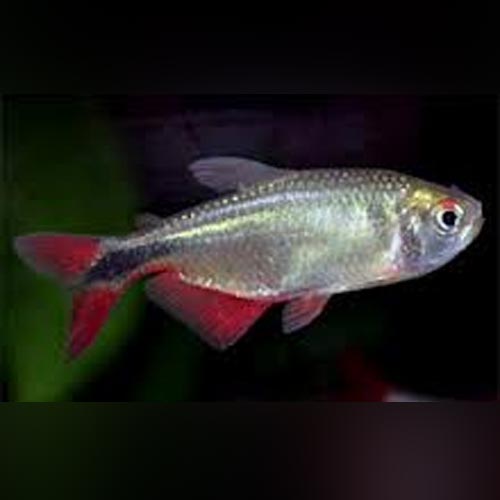
For those who desire a larger schooling fish, the Buenos Aires tetra is perfect. The Buenos Aires tetra was discovered in 1907 by a collector named Carl Eigenmann, who got to name a lot of fish in those days. He found this species in Argentina, so with a little thought he came up with "Buenos Aires". These fish do best in schools of six or more, but they do grow to three inches and are active, so they are great for midsize tanks but not for nano tanks. These tetras are hardy and eat flake food. A school of large Buenos Aires tetras can handle themselves among aggressive fish, as long as they do not fit in their mouths.
Quick Facts
| Scientific Name | Psalidodon anisitsi (formerly Hyphessobrycon anisitsi) |
| Origin | Paraná basin (Argentina, Paraguay, Brazil) |
| Care Level | Easy |
| Temperament | Semi-aggressive (nips fins; eats soft plants) |
| Adult Size | Up to 3" |
| Lifespan | 5–10 years |
| Diet | Omnivore |
| Water Temperature | 64–82°F (tolerates cooler water) |
| pH | 6.0–8.0 |
| Group Size | Does best in a group |
| Shipping Size | Approx. 1½" |
Care Guide
Tank setup: These are larger, active schooling fish, so give them open swimming space, plants or driftwood along the back and a tight-fitting lid, since they jump.
Feeding: Feed a quality flake or small pellet once or twice a day. They also enjoy frozen foods like bloodworms and brine shrimp.
Tankmates: They do well with other active, similar-size fish such as larger tetras, barbs, rainbowfish, peaceful cichlids, corydoras and plecos. Very small fish may be eaten or bullied.
Good to know: Larger tetras are hardy and long-lived, and a big school makes a striking display.
Share
