AquariumFish.com
Freshwater fishBlue Heckel Discus
Blue Heckel Discus
Couldn't load pickup availability
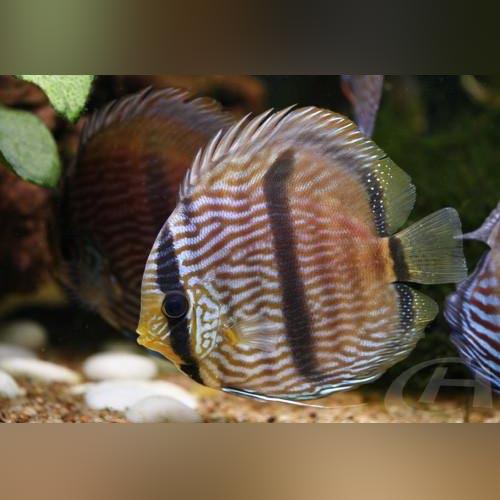
The Blue Heckel Discus is a true wild subspecies of the Blue Discus found in the Brazilian Amazon basin. Blue Heckels were discovered by Dr. Johann Heckel in 1884 when he was examining wild-caught species from the Johann Natterer expedition (the guy who discovered discus in 1835). The Blue Heckel discus is a Blue Discus with a solid black vertical bar across the face that covers the eye. Blue Heckel Discus are hardy and will even breed in the aquarium. This discus variation must be in every proper discus tank.
Quick Facts
| Scientific Name | Symphysodon discus (Heckel discus) |
| Origin | Brazil, Rio Negro (wild-caught) |
| Care Level | Difficult (for experienced keepers) |
| Temperament | Peaceful, shy; social |
| Adult Size | Up to 7–8" |
| Lifespan | 10–15 years |
| Diet | Omnivore (meaty foods) |
| Water Temperature | 82–86°F |
| pH | 5.0–6.5 (very soft water) |
| Group Size | Does best in a group |
| Shipping Size | Approx. 5" |
Care Guide
Tank setup: Give them a reliable heater, gentle filtration, driftwood and dim lighting. Wild discus need very soft, acidic water and very clean, stable conditions.
Feeding: Start with frozen foods like bloodworms and brine shrimp, then slowly add discus granules or pellets. Feed small meals a few times a day and remove anything uneaten within a few minutes.
Tankmates: Discus are calm and shy, so choose gentle tankmates that enjoy the same warm water: cardinal and rummynose tetras, sterbai corydoras and small plecos are popular choices. Avoid fast, boisterous or fin-nipping fish, and anything that competes hard for food. Many keepers avoid angelfish, which can bully discus and share diseases.
Living in groups: Discus are social and feel safest in a group. A single discus, or just two, tends to be stressed. When a pair forms to breed, they may claim part of the tank, so a group spreads out the attention.
Good to know: Heckels come from very soft blackwater and are the most demanding discus. Acclimate slowly and keep the water soft, acidic and stable.
Share