AquariumFish.com
Freshwater fishBlue Glaze Shrimp
Blue Glaze Shrimp
Couldn't load pickup availability
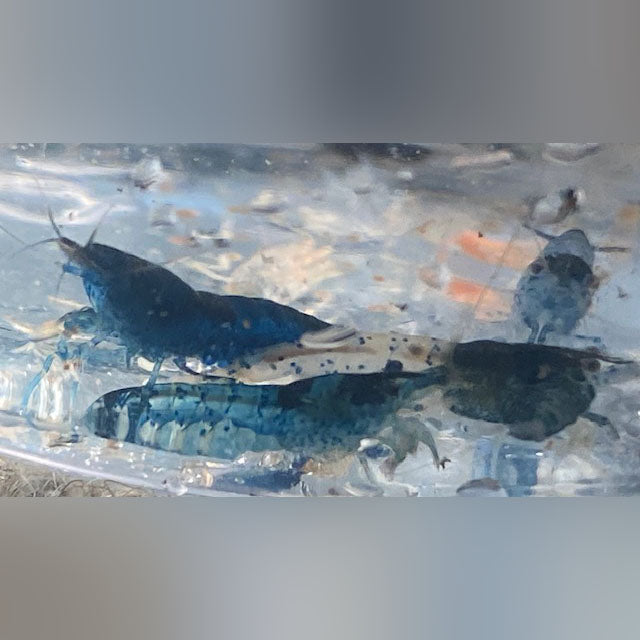
Blue glaze shrimp are an exotic variation of the Caridina species bred in Taiwan for bright blue and sparkling patterns. Each shrimp features small dark blue dots on a varying blue pattern on the body (see picture). These shrimp are a step up from the blue velvet and are difficult to breed in a consistent color pattern. You might find this out if these breed in your crustacean clubhouse.
Moss, plants and small pieces of driftwood make excellent hangouts for these scavengers. We suggest shrimp pellets to ensure they get a complete diet. They don't need much, so don't overfeed! Also, do not use medication or raise the water temperature over 78 degrees. Blue glaze shrimp can tolerate a little salt in the water.
Quick Facts
| Scientific Name | Caridina cf. cantonensis (blue glaze) |
| Origin | Taiwan (aquarium-bred) |
| Care Level | Moderate to difficult (needs soft, stable water) |
| Temperament | Peaceful |
| Adult Size | Up to 1" |
| Lifespan | 1½–2 years |
| Diet | Omnivore (grazes on algae) |
| Water Temperature | 68–76°F |
| pH | 5.8–6.8 |
| Water Hardness | GH 4–6, KH 0–1 (soft) |
| Group Size | Does best in a group |
| Shipping Size | Approx. ½" |
Care Guide
Tank setup: Caridina bee and Taiwan bee shrimp need soft, slightly acidic water. Use a mature, cycled tank with an active (buffering) shrimp substrate, RO water remineralized for shrimp, moss and plants, and a sponge filter.
Feeding: Feed a small amount of quality shrimp food once a day, and remove any uneaten food after a few hours.
Tankmates: Caridina are best kept in a shrimp-only tank or with tiny, peaceful fish like otocinclus, plus snails. Avoid cichlids and other fish that will eat shrimp. Different bee and Taiwan bee varieties can crossbreed, but they will not breed with Neocaridina.
Good to know: Acclimate slowly (drip for an hour or more). Stable water matters more than perfect numbers, and sudden changes in temperature or hardness are the most common cause of losses.
Share