AquariumFish.com
Freshwater fishSnow White Discus
Snow White Discus
Couldn't load pickup availability
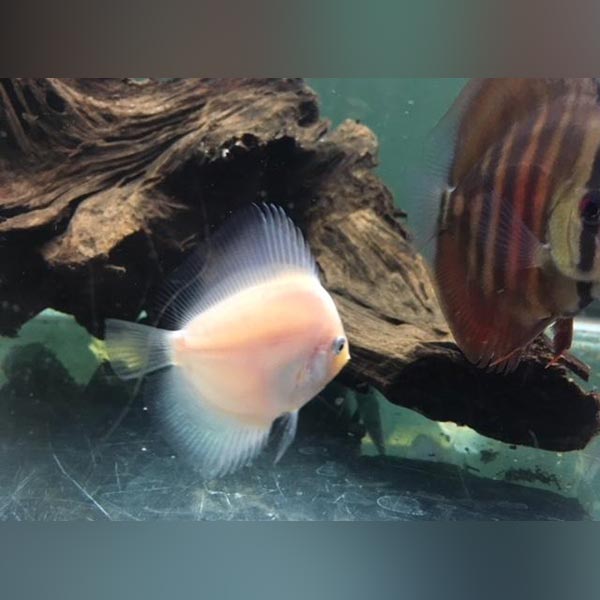
Snow White discus have a completely white body, and a blue hue develops on the fins as the fish matures. The snow white discus can come with some blue at the end of their fins; in that case, the fish is referred to as a white diamond discus. This variation was developed in the 1990s in Thailand.
Quick Facts
| Scientific Name | Symphysodon aequifasciatus (captive-bred color variety) |
| Origin | Amazon basin (captive-bred in Thailand and Singapore) |
| Care Level | Moderate (needs warm, very clean water) |
| Temperament | Peaceful, shy; social |
| Adult Size | Up to 6–7" |
| Lifespan | 10+ years |
| Diet | Omnivore (meaty foods) |
| Water Temperature | 82–88°F |
| pH | 6.0–7.5 |
| Group Size | Does best in a group |
| Shipping Size | Approx. 2" |
Care Guide
Tank setup: Give them a reliable heater, gentle but strong filtration, and a bare bottom or fine sand for easy cleaning. Keep the tank in a quiet spot. Discus need very clean water.
Feeding: Feed small meals of quality discus pellets or granules a few times a day, and remove uneaten food within a few minutes, since leftovers quickly foul the water. They also enjoy frozen foods like bloodworms and brine shrimp. New arrivals may need frozen food for a while before they accept pellets.
Tankmates: Discus are calm and shy, so choose gentle tankmates that enjoy the same warm water: cardinal and rummynose tetras, sterbai corydoras and small plecos are popular choices. Avoid fast, boisterous or fin-nipping fish, and anything that competes hard for food. Many keepers avoid angelfish, which can bully discus and share diseases.
Living in groups: Discus are social and feel safest in a group. A single discus, or just two, tends to be stressed. When a pair forms to breed, they may claim part of the tank, so a group spreads out the attention.
Good to know: White discus show every mark, so very clean water and stable conditions keep them looking their best. Discus show stress by darkening their color and hiding. A dark discus in a corner usually means the water quality or tankmates need checking.
Share