AquariumFish.com
Freshwater fishMonk Goby
Monk Goby
Couldn't load pickup availability
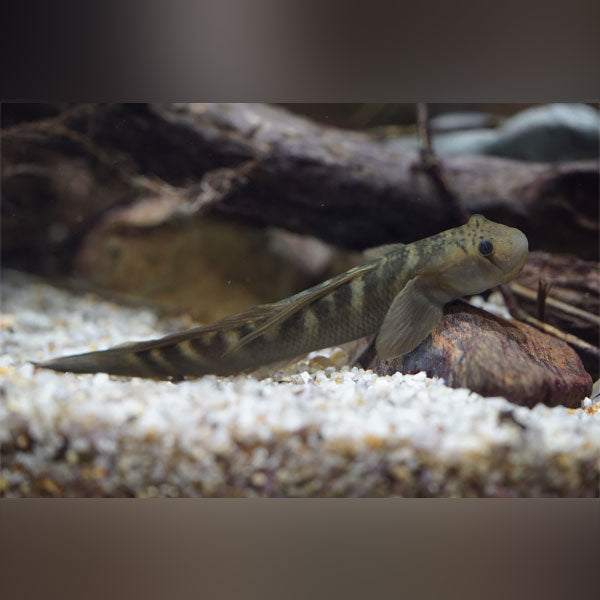
The monk goby lives in freshwater as an adult, but its larvae drift to brackish and salt water. It was originally discovered and classified in southern Japan by the great ichthyologist Shigeho Tanaka in 1909. Unfortunately this goby is so rare in the aquarium trade that a lot more is written about Dr. Tanaka (who lived 96 years, proof that ichthyology extends your life) than about the monk goby. Also called the grazing goby, these gobies eat lots of algae and will eat film algae on glass and rocks in the aquarium. Since these fish need veggies, we suggest dropping a couple of algae wafers in the tank each week.
Quick Facts
| Scientific Name | Sicyopterus japonicus |
| Origin | Japan and Taiwan |
| Care Level | Moderate (needs clean, oxygen-rich, flowing water) |
| Temperament | Peaceful with other fish; males territorial with each other |
| Adult Size | Up to 5" |
| Lifespan | 5–8 years |
| Diet | Algae eater |
| Water Temperature | 72–79°F |
| pH | 6.5–7.5 |
| Group Size | One male with several females |
| Shipping Size | Approx. 4" |
Care Guide
Tank setup: These gobies come from clear, fast-flowing island streams. Give them a mature tank with strong current, high oxygen, smooth rocks covered in algae and biofilm, and a tight lid, since they can climb out.
Feeding: These gobies graze on algae off rocks, so they do best in a mature tank. Also feed algae wafers. They may go hungry in a very clean, new tank.
Tankmates: They do well with small, peaceful fish that like cool, flowing water, such as danios, rasboras, hillstream loaches and dwarf shrimp. Males may spar with each other.
Good to know: Stream gobies cling to rocks with a sucker formed by their pelvic fins. Their larvae drift to the sea to develop, so they rarely breed in aquariums.
Share