AquariumFish.com
Freshwater fishGreen Tefe Discus WILD
Green Tefe Discus WILD
Couldn't load pickup availability
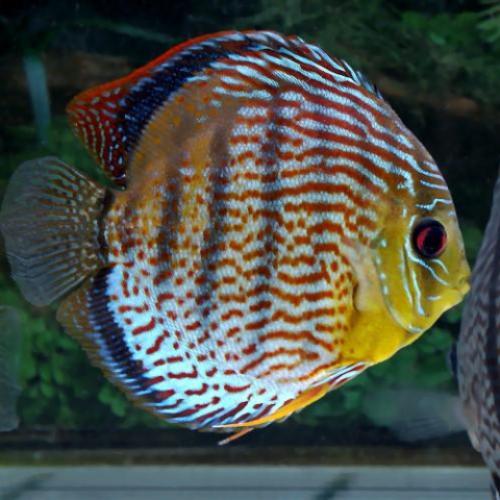
Dr. Pellegrin discovered this subspecies in the western Amazon basin of Brazil in a region called Tefé, hence this discus is referred to as the green discus or Tefé green discus. The green discus features a light olive green body with wide black vertical bands. Most Tefé discus develop small red spots on their body as they age, considered a desirable feature by wild discus enthusiasts. The larger and older this discus gets, the more color and red spots it displays. Kind of like people.
Quick Facts
| Scientific Name | Symphysodon tarzoo (green discus) |
| Origin | Brazil, Lake Tefé region (wild-caught) |
| Care Level | Difficult (for experienced keepers) |
| Temperament | Peaceful, shy; social |
| Adult Size | Up to 7–8" |
| Lifespan | 10–15 years |
| Diet | Omnivore (meaty foods) |
| Water Temperature | 82–86°F |
| pH | 5.0–6.5 (very soft water) |
| Group Size | Does best in a group |
| Shipping Size | Approx. 3" |
Care Guide
Tank setup: Give them a reliable heater, gentle filtration, driftwood and dim lighting. Wild discus need very soft, acidic water and very clean, stable conditions.
Feeding: Start with frozen foods like bloodworms and brine shrimp, then slowly add discus granules or pellets. Feed small meals a few times a day and remove anything uneaten within a few minutes.
Tankmates: Discus are calm and shy, so choose gentle tankmates that enjoy the same warm water: cardinal and rummynose tetras, sterbai corydoras and small plecos are popular choices. Avoid fast, boisterous or fin-nipping fish, and anything that competes hard for food. Many keepers avoid angelfish, which can bully discus and share diseases.
Living in groups: Discus are social and feel safest in a group. A single discus, or just two, tends to be stressed. When a pair forms to breed, they may claim part of the tank, so a group spreads out the attention.
Good to know: Tefé greens develop more red spotting as they mature. Like all wild discus, they need soft, acidic water and slow acclimation.
Share