SLA
Saltwater fishCortez Stingray
Cortez Stingray
Couldn't load pickup availability
Cortez Stingray: The Spotted Bottom Dweller
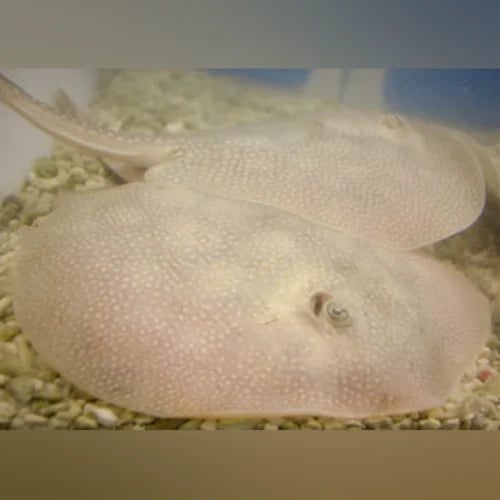
The Cortez Stingray (Urobatis maculatus), also known as the Spotted Round Ray, is a captivating and relatively small species of round ray native to the eastern Pacific Ocean, primarily found in the Gulf of California (Sea of Cortez). Its body is a round, flat disc with a coloration of yellowish-brown to grayish-brown, featuring distinctive irregular dark brown to black spots and blotches that provide excellent camouflage on the sandy sea floor.
Though one of the smaller stingray species, reaching a maximum disc width of about 10 to 12 inches (25-31 cm), the Cortez Stingray requires a massive commitment due to its specialized care needs and active benthic (bottom-dwelling) nature. An absolute minimum tank size of 180 gallons is required, but the tank must prioritize floor space (footprint) over height, ideally being 6 feet long by 2.5 to 3 feet wide or more.
The Cortez Stingray possesses a venomous tail spine which it uses only for self-defense. This species is suitable only for the Expert-Only hobbyist who can provide a stable, spacious, and dedicated environment.
Diet & Compatibility:
- Diet: The Cortez Stingray is a dedicated Carnivore. In the wild, it forages in the sand for small benthic invertebrates like worms, crustaceans, and small mollusks. In captivity, its diet must be varied and protein-rich, consisting of meaty marine foods such as chopped fresh shrimp, scallops, pieces of marine fish, and squid.
- Feeding: It may be initially difficult to feed; using a feeding stick or long forceps and enticing it with live marine shrimp can help. Feed daily or every other day. Due to potential nutritional deficiencies, many experts recommend supplementing its diet with an Iodine/Vitamin supplement specifically formulated for Elasmobranchs (sharks and rays).
- Reef Compatibility: It is Not Reef Safe. While it does not eat coral, its constant digging and burrowing activity will knock over and disturb corals and live rock. It will also systematically hunt and consume ornamental invertebrates (shrimp, crabs, snails, etc.) and small, bottom-dwelling fish.
- Temperament: It is generally Peaceful toward non-prey tankmates but should only be housed with large, robust fish that occupy the mid to upper water column. Avoid any fish known to be "nippers" (such as certain large Angelfish or Triggerfish) as they may pick at the ray's eyes, fins, or tail. Keep singly or in a very large pair/group.
- Venomous Spine: The tail contains a venomous spine used purely for defense. Extreme caution must be taken during all tank maintenance. Never try to net a ray without consulting an expert, and never place your hand near the tail. The sting is extremely painful; seek medical attention immediately if stung.
Quick Facts
- Scientific Name: Urobatis maculatus
- Primary Common Name: Cortez Stingray
- Other Common Names: Spotted Round Ray, Cortez Round Ray
- Origin: Eastern Pacific (Gulf of California, Mexico)
- Max Disc Size: 10-12 inches (25-31 cm)
- Temperament: Peaceful (Venomous)
- Diet: Carnivore (Benthic Invertebrates)
- Minimum Tank Size: 180+ Gallons (Prioritizing floor space)
- Reef Compatibility: Not Reef Safe (Will disturb substrate/corals and eat inverts)
Share