
AquariumFish.com
Freshwater fishChili Rasbora
Chili Rasbora
Couldn't load pickup availability
NOTE: Due to pollution issues in their native collecting areas, AquariumFish.com has been out of true chili rasboras, and we hope they will recover. Human overpopulation is not good for our trade. For the remainder of this year we are substituting "strawberry rasbora" (Boraras naevus). Same size and disposition, but they do not get the same pattern as true chili rasbora (Boraras brigittae).
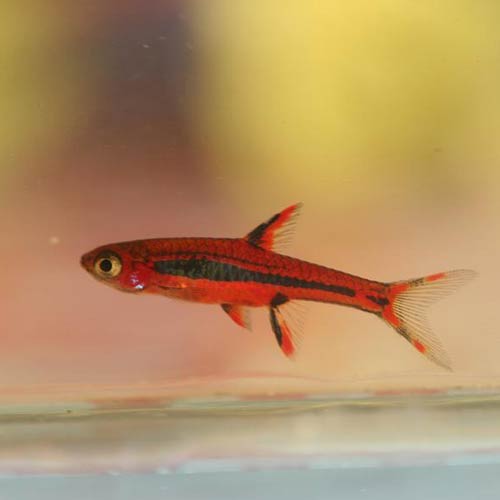
The chili rasbora, or brigittae rasbora, is a bright little addition to the fish tank. These little fish are bright red and grow to only 1/2 inch. We recommend a school of at least six. Like math nerds, these micro rasboras are happier in a school. These tiny guys are great in small fish tanks and planted aquariums, and they get along with fancy shrimp and other gentle tank mates.
PLEASE NOTE: These are wild-caught fish, and often the exporters will ship similar fish such as strawberry rasbora and phoenix rasbora. If you want to ensure no mix-ups, please state "MUST BE TRUE" on your order.
Quick Facts
| Scientific Name | Boraras brigittae |
| Origin | Borneo (Kalimantan), Indonesia |
| Care Level | Easy to moderate |
| Temperament | Peaceful |
| Adult Size | Up to ¾" |
| Lifespan | 3–5 years |
| Diet | Omnivore (tiny foods) |
| Water Temperature | 72–80°F |
| pH | 6.0–7.0 |
| Group Size | Does best in a group |
| Shipping Size | Approx. ⅓" |
Care Guide
Tank setup: Give them dense plants, floating plants, a dark substrate and gentle filtration (a sponge filter is ideal, since they are small enough to be pulled into strong intakes). Soft, slightly acidic water brings out their best color.
Feeding: Feed crushed flake or micro pellets once or twice a day, only as much as they eat in a couple of minutes. They also enjoy frozen brine shrimp.
Tankmates: Keep them with other tiny, peaceful fish such as other micro rasboras, small tetras, pygmy corydoras, otocinclus and dwarf shrimp. Avoid large or boisterous fish, which can eat or stress them.
Good to know: Micro rasboras show their best color and natural schooling behavior in larger groups and well-planted tanks.
Share
