SDC
Saltwater fishYellow Spotted Scorpionfish
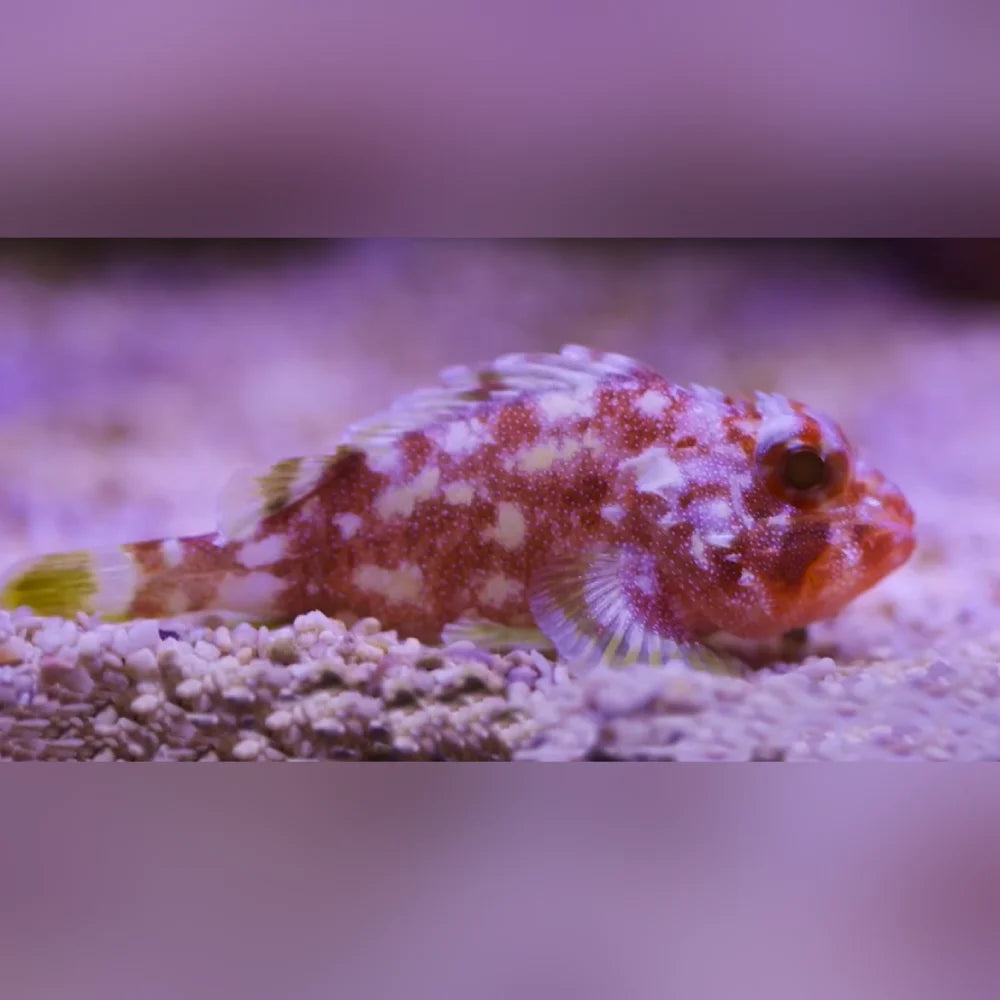
Yellow Spotted Scorpionfish
Couldn't load pickup availability
Yellow Spotted Scorpionfish (Stonefish): The World's Most Venomous Fish
The Yellow Spotted Scorpionfish is a common name sometimes used in the aquarium trade for a species belonging to the genus Stonefish (Synanceia), most frequently the Reef Stonefish (Synanceia verrucosa). The name "yellow spotted" refers to the occasional patches of yellow, red, or orange that contribute to its uncanny, rock-like camouflage. The Stonefish is infamous for being the most venomous fish in the world, making it a challenging and potentially lethal choice suited only for the most experienced and cautious aquarists and public exhibits.
Native to the shallow, rubble-strewn reefs and sandy lagoons of the Indo-Pacific, the Stonefish is a master of disguise. It possesses scaleless, warty skin, often covered in algae, allowing it to remain motionless and virtually invisible on the substrate, mimicking a rock or coral lump. This ambush predator uses its large, upturned mouth to swiftly engulf unsuspecting prey.
Stonefish typically reach an adult size of 12 to 16 inches (30–40 cm), though some individuals can grow larger. Due to their sedentary nature, they do not require extensive swimming space but do demand a minimum tank size of 50 to 100 gallons to accommodate their size and bioload. The aquarium must be secure and designed as a specialized Fish-Only (FOWLR) system with a fine, soft substrate (sand or fine gravel) for burrowing and ample, robust rockwork for hiding.
The extreme danger posed by this species cannot be overstated. Its 12 to 14 stout dorsal fin spines are needle-sharp and contain a highly potent, protein-based neurotoxin (verrucotoxin). When pressure is applied (e.g., by stepping on it), the spines deploy like hypodermic needles, injecting venom. Stings are excruciatingly painful and can be fatal to humans; immediate medical attention and antivenom are required.
Diet & Compatibility:
- Diet: The Stonefish is a dedicated Carnivore and ambush predator. Its natural diet consists of small fish and crustaceans.
- Feeding: Due to their low metabolism, they only need to be fed 1–2 times per week. They must initially be offered live foods such as ghost shrimp or small marine feeder fish. They can sometimes be trained to accept non-living meaty foods (chunks of squid, krill, shrimp) presented on a feeding stick or tweezers to simulate movement, but this requires patience. Never feed freshwater feeder fish.
- Reef Compatibility: It is Not Reef Safe. While it will not bother corals, it is a highly efficient predator that will systematically consume all ornamental invertebrates (shrimp, crabs, snails) and any fish that can fit into its surprisingly large mouth.
- Temperament: It is generally Peaceful Ambush Predator, but only towards tankmates too large to be eaten. It should only be housed in a species-only tank or with very large, robust, and alert tankmates that are not bottom-dwelling. It is a solitary species and should be kept singly.
- Venomous Spines: Extreme caution is mandatory. The fish must be handled with tools only. If stung, immediately immerse the affected area in the hottest water you can tolerate (not scalding, approx. 113°F or 45°C) for 30–90 minutes, as heat helps break down the venom. Seek medical attention immediately.
Quick Facts
- Scientific Name: Synanceia sp., most often S. verrucosa
- Primary Common Name: Yellow Spotted Scorpionfish (Stonefish)
- Other Common Names: Reef Stonefish, Stonefish, Yellow-patched Stonefish
- Origin: Indo-Pacific (Widespread)
- Max Size: 12–16 inches (30–40 cm)
- Temperament: Peaceful Ambush Predator (Extremely Venomous)
- Diet: Carnivore (Small fish and crustaceans; requires live food initially)
- Minimum Tank Size: 50–100+ Gallons (Specialized)
- Reef Compatibility: No (Will consume all small fish and inverts)
Share