SLA
Saltwater fishYellow Spotted Boxfish
Yellow Spotted Boxfish
Couldn't load pickup availability
Yellow Boxfish: The Toxic, Gentle Giant
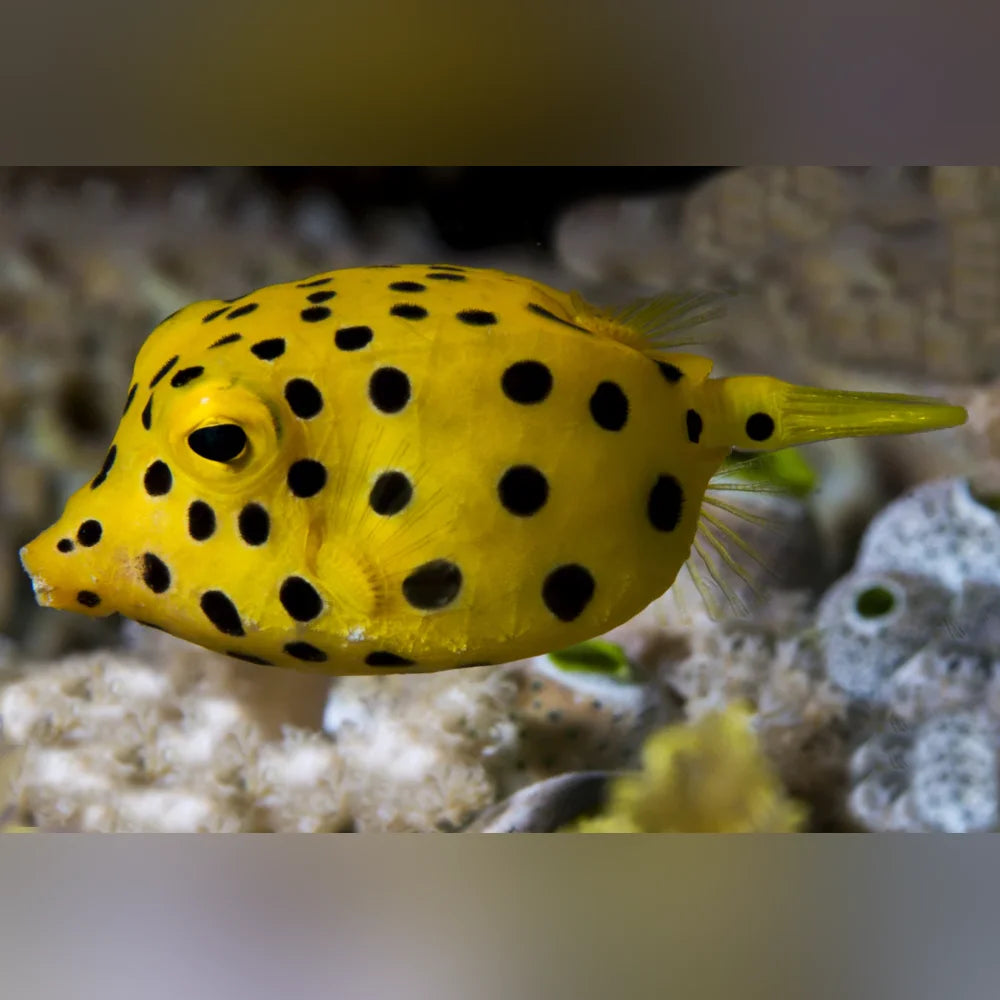
The Yellow Spotted Boxfish (Ostracion cubicus) or Spotted Boxfish, is an iconic marine fish easily recognized by its cube-shaped body and distinctive pattern. It is also known by common names such as Cubicus Boxfish or Polka Dot Boxfish. This fish is generally purchased as a stunning juvenile, which features a bright yellow carapace covered in bold black spots.
While irresistible when small, the Yellow Boxfish is strictly an expert-only species due to several critical challenges. First, it grows into a large fish, reaching up to 18 inches (45 cm) in the wild. As it matures, its vibrant yellow coloration fades to a more subdued tan, brownish, or blue-green hue, and the spots shrink.
Second, and most critically, all boxfish possess a defense mechanism: when severely stressed, threatened, or dying, they release a potent skin toxin called Ostracitoxin (or Pahutoxin) into the water. This venom can quickly kill all other fish in the aquarium, including the boxfish itself. Maintaining a stable, low-stress environment and planning for emergency water changes is essential.
Diet & Compatibility:
- Diet: The Yellow Boxfish is an Omnivore that grazes constantly on benthic algae, small invertebrates, and detritus in the wild. In the aquarium, it requires a varied diet fed multiple times daily to maintain its health and bulk. Offer high-quality frozen meaty foods (e.g., mysis shrimp, chopped squid, clams) and plant matter (e.g., nori/seaweed sheets), often supplemented with vitamins. They are slow, methodical feeders and must not be housed with fast or aggressive tankmates that will outcompete them for food.
- Toxicity & Stress: Due to the risk of toxin release, the fish requires a massive aquarium (minimum of 180-250+ gallons) with exceptional filtration and a powerful protein skimmer. The large water volume helps to dilute any potential toxin release. Stressors like bullying, netting, or poor water quality are the main triggers.
- Reef Compatibility: It is Not Reef Safe. While the fish generally avoids sessile corals, it is known to nip at LPS (Large Polyp Stony) corals, soft corals, and especially tubeworms (feather dusters), which it views as food. It will also consume small ornamental shrimp and snails.
- Temperament & Tankmates: It is generally Peaceful toward non-boxfish species, but it is solitary and should be kept singly unless the system is enormous and allows for multiple, separate territories. Tankmates should be large, peaceful, and non-aggressive to prevent the boxfish from becoming stressed. Avoid boisterous fish or those that may pick at its smooth, sensitive skin.
- Special Note: Due to its poor maneuverability, ensure that water flow is gentle and that filtration intake tubes are covered to prevent the fish from being sucked against the grates. Never use the water the fish was shipped in when transferring it to the quarantine or display tank.
Quick Facts
- Scientific Name: Ostracion cubicus
- Primary Common Name: Yellow Boxfish
- Other Common Names: Cubicus Boxfish, Polka Dot Boxfish, Cube Trunkfish
- Origin: Indo-Pacific (Widespread)
- Max Size: 18 inches (45 cm)
- Temperament: Peaceful (to other large, non-aggressive fish) / Highly Toxic
- Diet: Omnivore (Constant grazer of algae and meaty foods)
- Minimum Tank Size: 180–250+ Gallons (Expert Only)
- Reef Compatibility: Not Reef Safe (May nip corals and consume invertebrates)
Share