SLA
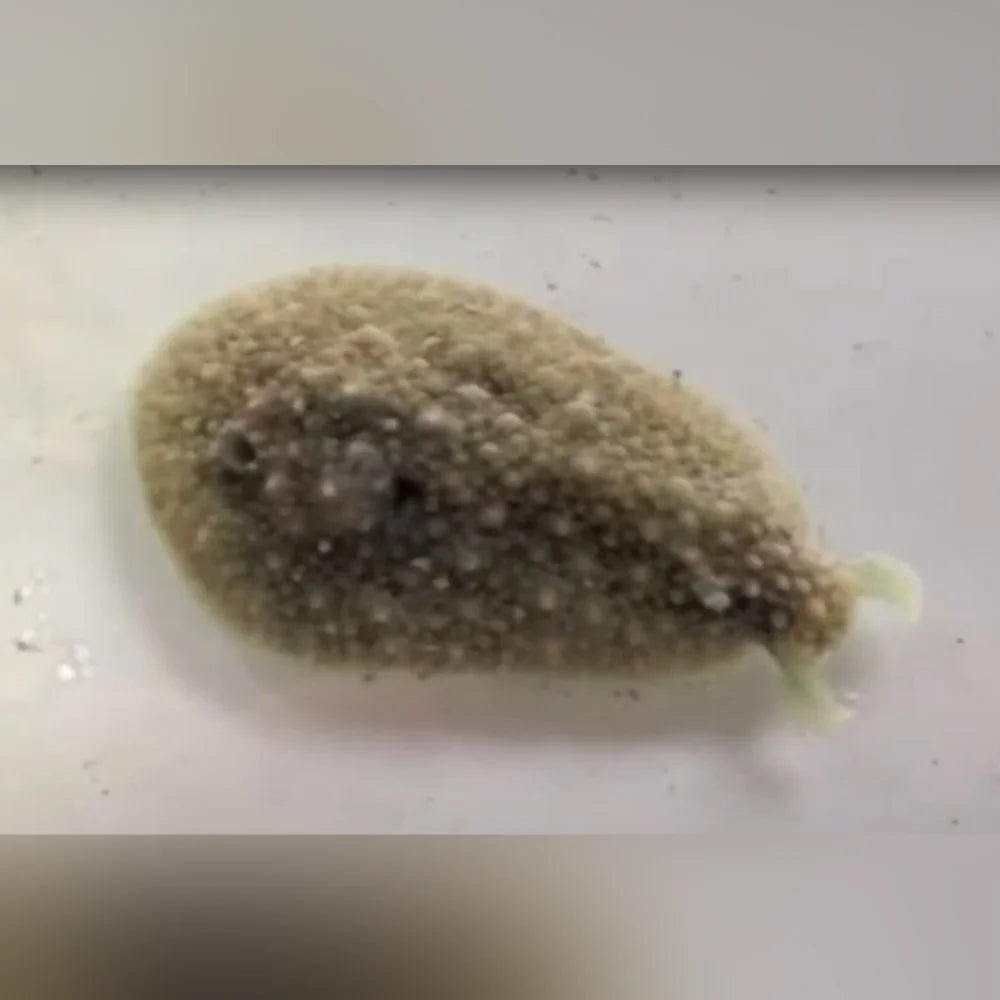
Saltwater invertebrateWarty Sea Cat
Warty Sea Cat
Couldn't load pickup availability
The Warty Sea Cat: Dolabrifera dolabrifera
The Warty Sea Cat or Warty Sea Hare (sometimes called a Nudibranch Sea Hare in the hobby) is a species of sea slug belonging to the family Aplysiidae (sea hares). Its scientific name is Dolabrifera dolabrifera. It is found globally in warm tropical and subtropical waters, typically in shallow, rocky intertidal zones.
Unlike the well-known California Sea Hare (which can grow very large), D.dolabrifera is a relatively small, flattened, and cryptically colored sea slug, reaching a maximum size of about 3 to 4 inches (8-10 cm). Its body is covered in low, warty tubercles (hence the name "Warty Sea Cat" or "Warty Sea Hare") and its color ranges widely, usually a mottled green, brown, or reddish hue, allowing it to camouflage exceptionally well against the algae-covered rocks where it grazes.
The D.dolabrifera is a specialized and effective herbivore, often sought after by aquarists to control certain types of nuisance algae. Like all sea hares, it is highly sensitive to changes in salinity, temperature, and is intolerant of copper-based medications. It is also an expert-only invertebrate, as its specific dietary needs and vulnerability require careful management.
Diet & Compatibility:
- Diet: This species is a Specialist Herbivore. It primarily grazes on filamentous green algae (including hair algae) and turf algae. Its color often reflects the type of algae it is consuming the most. It uses a rasp-like organ called a radula to scrape and consume the algae.
- Feeding Challenge: This sea hare is a voracious eater. In a typical home aquarium, it will quickly consume all available algae and then starve if not provided with supplementary food. Supplementation with Nori seaweed (dried kelp), or fresh macroalgae like Caulerpa or Gracilaria, is essential for its long-term survival.
- Toxicity Warning: Like other sea hares, D.dolabrifera has defense mechanisms. While some sea hares release a purple ink, this specific species is generally thought to not release ink but possesses glands that may secrete a toxic, milky white substance when it is stressed, injured, or dying. A sudden death of the slug can result in the release of this toxin, which can wipe out other invertebrates and fish in the tank. Immediate large water changes and carbon filtration are required if it dies.
- Reef Compatibility: It is Completely Reef Safe and will not bother corals or sessile inverts. It is peaceful but highly vulnerable to predation.
- Vulnerability: The Warty Sea Cat is extremely delicate and susceptible to being sucked into unprotected pump intakes, overflows, and powerheads. All equipment should be thoroughly screened with fine mesh or sponge guards. It should only be kept with peaceful fish.
Quick Facts
- Scientific Name: Dolabrifera dolabrifera
- Primary Common Name: Warty Sea Cat
- Other Common Names: Warty Sea Hare, Common Sea Hare
- Origin: Circum-global (Worldwide in Tropical/Subtropical Seas)
- Max Size: 3-4 inches (8-10 cm)
- Temperament: Peaceful (Specialist Herbivore / Expert Only)
- Diet: Specialist Herbivore (Feeds on filamentous and turf algae; requires supplementation)
- Minimum Tank Size: 30 Gallons (Requires ample algae supply)
- Reef Compatibility: Completely Reef Safe (Vulnerable to predation/equipment)
Share