AquariumFish.com
Freshwater fishSuper Kuhli Loach
Super Kuhli Loach
Couldn't load pickup availability
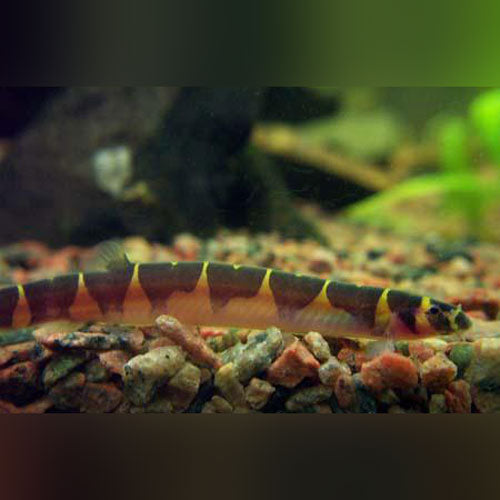
The super kuhli loach, also called the giant kuhli loach, is larger than the smaller banded or common kuhli loach. The super kuhli looks similar, with a yellow-orange body and dark brown vertical stripes. Like other loaches, they have barbels around the mouth, which are used to find food in the substrate.
The super kuhli is most active at twilight and at nighttime, both in nature and in the home aquarium, remaining hidden or buried in the sand during the day.
These are very nocturnal creatures, so often they wait until dark to move throughout the fish tank. We recommend a small school of three to four so at least you have a chance to see a couple of them during the daylight hours. The season just started on this species, so they are shipping on the small side, approx. 2 inches.
Quick Facts
| Scientific Name | Pangio myersi |
| Origin | Mekong basin (Thailand, Laos, Cambodia, Vietnam) |
| Care Level | Easy |
| Temperament | Peaceful (shy, nocturnal) |
| Adult Size | Up to 4" |
| Lifespan | 8–10 years |
| Diet | Omnivore (sinking foods) |
| Water Temperature | 75–82°F |
| pH | 5.5–7.0 |
| Group Size | Does best in a group |
| Shipping Size | Approx. 2–3" |
Care Guide
Tank setup: Kuhlis love to burrow, so use a soft sand bottom with plants, leaf litter and hiding spots. Cover filter intakes with a sponge, since they can squeeze into small gaps, and keep a lid on the tank.
Feeding: Feed sinking pellets or wafers, ideally in the evening when kuhlis are most active. They also enjoy frozen foods like bloodworms and brine shrimp.
Tankmates: Kuhlis do well with peaceful fish like tetras, rasboras, corydoras, danios and dwarf shrimp. Avoid large or aggressive fish that could eat them.
Good to know: Kuhlis are shy during the day; a larger group and plenty of cover help them come out more often.
Share