SLA
Saltwater invertebrateSlipper Lobster
Slipper Lobster
Couldn't load pickup availability
Slipper Lobster: The Bulldozer of the Reef
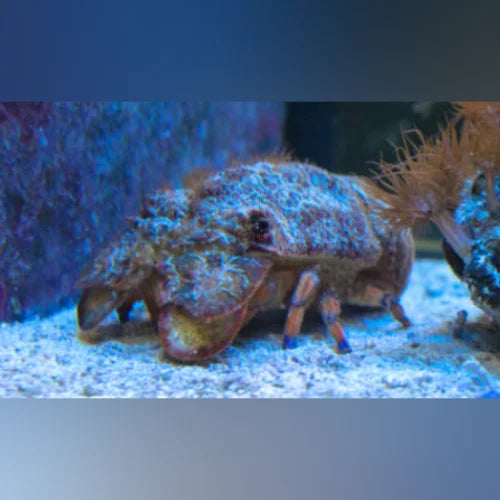
The Slipper Lobster belongs to the family Scyllaridae and is easily distinguished from true lobsters and spiny lobsters by its flattened, shovel-like antennae and lack of large claws (chelae). With a body that is typically compressed and wide, they are also commonly known as Shovel Nose Lobsters or Bulldozer Lobsters. Species in the aquarium trade, such as the Hawaiian Brown Slipper Lobster ( Parribacusantarcticus ) or various Scyllarides species, are prized for their unique, armored appearance.
Slipper Lobsters are powerful, nocturnal burrowers and scavengers. They use their flat bodies and shovel-like appendages to dig extensively beneath live rock and into deep sand beds. This behavior is the primary challenge in their care, as they can destabilize rockwork, potentially causing rock slides that may injure or crush tank structures and inhabitants. Extreme care must be taken to secure all rockwork directly to the aquarium bottom, not resting on the substrate.
Due to their size, growth potential (up to 8 inches for many species sold in the hobby), and burrowing habits, they require a large, mature aquarium with secure aquascaping.
Diet & Compatibility:
- Diet: This is a dedicated Carnivore / Scavenger. In the wild, Slipper Lobsters are adept at cracking open and consuming mollusks (snails, oysters, clams) and other small benthic invertebrates.
- Feeding: They are nocturnal, so they should be target-fed after lights out with meaty foods such as frozen marine shrimp, squid, pieces of fish, and krill. Adequate iodine and calcium supplementation is critical to ensure proper, successful molting.
- Reef Compatibility: Not Recommended / With Extreme Caution. While they generally ignore corals, their large size and incessant digging can completely undermine a reef aquascape. More importantly, they will systematically predate upon most ornamental invertebrates, including snails, small crabs, shrimp, and small, sleeping fish. They are best suited for Fish-Only-With-Live-Rock (FOWLR) systems.
- Temperament: Semi-Aggressive / Predatory. They are peaceful toward large fish but should not be housed with any small fish that sleep on the bottom. They are territorial towards other lobsters and large crustaceans; keep only a single specimen or a known mated pair.
- Special Care Note: As a crustacean, Slipper Lobsters are extremely sensitive to copper-based medications and high levels of nitrates. A stable, mature tank with low nitrates is essential for their long-term health, particularly during the vulnerable molting process.
Quick Facts
- Scientific Family: Scyllaridae (e.g., Parribacus antarcticus, Scyllarides spp.)
- Primary Common Name: Slipper Lobster
- Other Common Names: Shovel Nose Lobster, Sculptured Slipper Lobster, Bulldozer Lobster
- Origin: Tropical and Warm Oceans Worldwide (Indo-Pacific, Atlantic, Caribbean)
- Max Size: Up to 8 inches (20 cm) for common aquarium species. Larger species exist.
- Temperament: Semi-Aggressive / Predatory (Burrower)
- Diet: Carnivore (Cracks open mollusks and preys on small inverts)
- Minimum Tank Size: 75 – 90 Gallons (for an adult specimen)
- Reef Compatibility: Not Recommended (Predatory and major rockwork disruptor)
Share