AquariumFish.com
Freshwater fishSkunk Loach
Skunk Loach
Couldn't load pickup availability
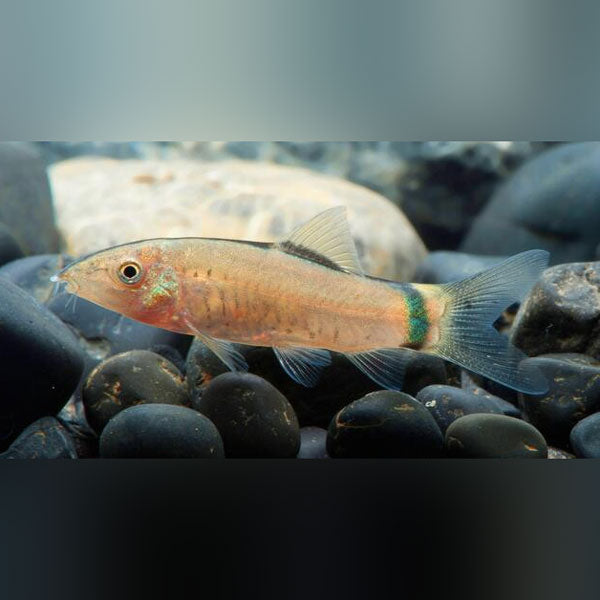
The skunk loach is shaped like a slug, as opposed to the more slender kubotai and yo-yo loaches. Also in the botia family, these loaches only grow to 2 inches and like to pal around and chase each other in the fish tank. The skunk loach, also called the mouse loach for its size and shape, is a bottom dweller and effective scavenger, but it is a good idea to drop in some sinking pellets a couple of times each week.
In the wild, skunk loaches inhabit rocky crevices along smaller rivers of Cambodia and Thailand.
Quick Facts
| Scientific Name | Yasuhikotakia morleti |
| Origin | Mekong and Chao Phraya basins (Thailand, Laos, Cambodia) |
| Care Level | Moderate |
| Temperament | Semi-aggressive (territorial; can harass tankmates) |
| Adult Size | Up to 3–4" |
| Lifespan | 8–15 years |
| Diet | Omnivore (bottom feeder; eats snails) |
| Water Temperature | 75–82°F |
| pH | 6.0–7.5 |
| Group Size | Single or group |
| Shipping Size | Approx. 1½" |
Care Guide
Tank setup: Give them many caves, rocks and driftwood so each loach can claim its own spot, a soft sand or smooth gravel bottom and good filtration. Keep a lid on the tank.
Feeding: Feed sinking pellets or wafers once or twice a day so food reaches the bottom. They also enjoy frozen foods like bloodworms and brine shrimp. They also eat pest snails.
Tankmates: Keep them with robust, fast fish of similar or larger size, such as barbs, danios, rainbowfish and semi-aggressive cichlids. Avoid slow, long-finned fish and other bottom dwellers that can't hold their own. They eat snails and shrimp.
Good to know: These loaches are bold and territorial; adding them last to an established tank with plenty of caves helps keep the peace.
Share