AquariumFish.com
Freshwater fishSamurai Gourami
Samurai Gourami
Couldn't load pickup availability
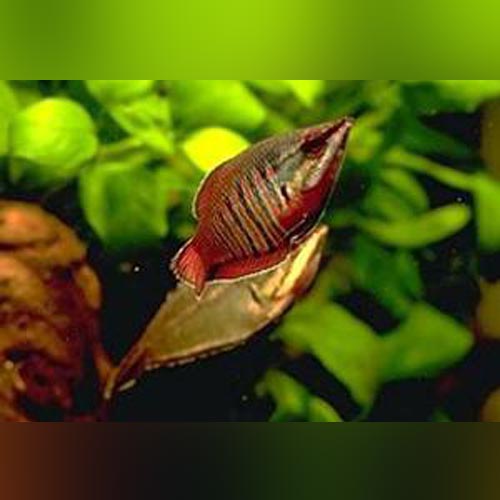
The samurai gourami, also called Vaillant's chocolate gourami after biologist Leon Vaillant (from way back in 1888), is a gem of the planted aquarium. In nature, this species prefers low pH and low light and will not adapt well to hard water with high pH. The samurai gourami is peaceful, and a small school of these will provide a lot of interesting interaction as the males compete for the females. This is one of the few species in nature where the females are the more colorful gender. The bright red pattern of the female looks a bit like the polished decorative armor of an ancient Japanese warrior.
We recommend the purchase of at least a pair of these beautiful fish. The female will display her colors with a male present, and both will be much happier pet fish.
Quick Facts
| Scientific Name | Sphaerichthys vaillanti |
| Origin | Borneo (Indonesia) |
| Care Level | Difficult (for experienced keepers) |
| Temperament | Peaceful, shy |
| Adult Size | Up to 2" |
| Lifespan | 4–5 years |
| Diet | Omnivore |
| Water Temperature | 75–82°F |
| pH | 4.0–6.5 (very soft water) |
| Breathes Air | Yes – labyrinth fish take air from the surface |
| Shipping Size | Approx. 1–2" |
Care Guide
Tank setup: These are blackwater fish: they need very soft, acidic water, dim lighting, a gentle filter and lots of plants and leaf litter. Peat or Indian almond leaves help tint and soften the water. Keep a lid on the tank and leave a gap of air above the water, since gouramis breathe from the surface and warm, humid air protects their labyrinth organ. Change small amounts of water often rather than large amounts at once.
Feeding: Feed small amounts once or twice a day. Many will learn to take fine flake or micro pellets once settled. They also enjoy small frozen foods like brine shrimp.
Tankmates: Keep them only with tiny, gentle fish that like the same soft, acidic water, such as small rasboras and pygmy corydoras. Avoid anything boisterous or larger.
Good to know: Unusually, the female is the more colorful sex, with bright red bands. Males are mouthbrooders and carry the eggs in their mouths.
Share