AquariumFish.com
Saltwater fishRock Beauty Angelfish
Rock Beauty Angelfish
Couldn't load pickup availability
Rock Beauty Angelfish: The Challenging Atlantic Beauty
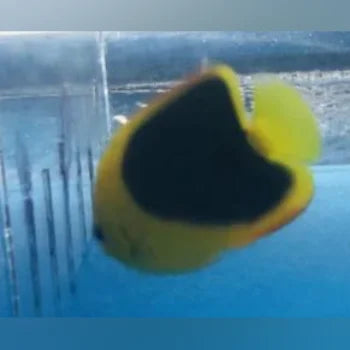
The Rock Beauty Angelfish (Holacanthus tricolor) is one of the most vividly colored and recognizable angelfish from the Atlantic Ocean. Its striking adult coloration features a bright yellow head and tail sharply contrasted against a deep black or blue-black body, with brilliant iridescent blue accents around the eyes and fin margins. Juveniles are almost entirely yellow, featuring only a small, blue-ringed black spot that expands as the fish matures.
Native to the reefs of the Tropical Western Atlantic, including the Caribbean Sea and Gulf of Mexico, the Rock Beauty is a magnificent but demanding specimen. It is categorized as a large angelfish, reaching up to 10–12 inches (25–30 cm) in length, and is suitable only for the expert aquarist due to its highly specialized dietary needs and territorial nature.
The biggest challenge in its long-term care is its natural diet, which consists primarily of marine sponges—a food source that is difficult to replicate in the home aquarium. Successful keeping requires a large, mature system and a dedicated, sponge-rich feeding regimen.
Diet & Compatibility:
- Care Level: Expert. This species is prone to stress and nutritional deficiencies, making it difficult to sustain long-term without highly specialized care.
- Diet: The Rock Beauty is an Omnivore that browses continuously throughout the day. Its diet is specialized, consisting mainly of sponges, tunicates, and algae in the wild. In captivity, a varied diet is essential, including sponge-based angelfish frozen formulas (mandatory for health), spirulina, Nori seaweed, and high-quality meaty foods (mysis, chopped clam, squid). Feed small amounts several times per day to mimic its natural browsing behavior.
- Minimum Tank Size: A very large, mature tank of 125 gallons or more is required to provide adequate swimming space and room for extensive live rock aquascaping. Larger is strongly recommended, especially for adult specimens.
- Aquascape: The tank must feature an abundance of live rock arranged to create numerous caves, overhangs, and crevices for grazing and security, as this species can be timid despite its territorial nature.
- Reef Compatibility: Not Reef Safe. While some claim "caution," the consensus is that this species will reliably nip at and consume soft corals, Large Polyp Stony (LPS) corals, clam mantles (Tridacnid species), and, critically, any sponges growing in the tank. They are best kept in a Fish Only With Live Rock (FOWLR) system.
- Temperament: Semi-Aggressive / Territorial. It should be kept singly and will typically show aggression toward other angelfish (especially those of the Holacanthus genus), as well as peaceful, smaller, or docile fish. Choose large, robust, and fast-swimming tankmates.
Quick Facts
- Scientific Name: Holacanthus tricolor
- Primary Common Name: Rock Beauty Angelfish
- Other Common Names: Yellow Nanny, Corn Sugar Angelfish
- Origin: Tropical Western Atlantic, Caribbean Sea, Gulf of Mexico
- Max Size: 10-12 inches (25–30 cm)
- Temperament: Semi-Aggressive / Territorial
- Diet: Omnivore (Requires sponge-based foods)
- Minimum Tank Size: 125+ Gallons
- Reef Compatibility: Not Reef Safe (Will nip corals, clams, and inverts)
Share