SLA
Saltwater fishRed V-Tail Grouper
Red V-Tail Grouper
Couldn't load pickup availability
Red V-Tail Grouper: A Striking Fish-Only Predator
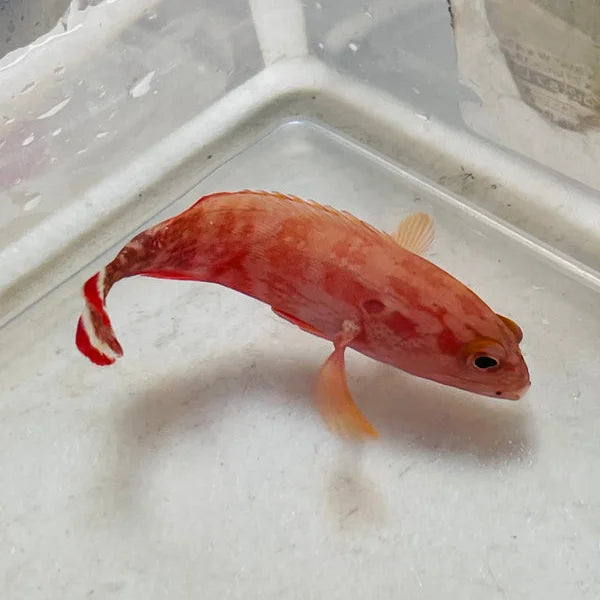
The Red V-Tail Grouper, accurately identified as Cephalopholis urodeta (and frequently misidentified using the synonym C.urodelus), is a popular and handsome member of the grouper family (Serranidae). It is highly recognizable by its base coloration of reddish-brown to dark red, which often features faint vertical barring. The common name comes from its most prominent feature: the caudal (tail) fin is adorned with two brilliant white to pale blue oblique stripes that meet to form a distinct 'V' or chevron pattern on the upper and lower lobes.
This species is native to the vast Indo-Pacific region. It is a relatively small grouper, attaining a manageable maximum size of around 11 inches (28 cm) in the home aquarium, although some sources suggest up to 18 inches, which likely refers to wild specimens or misidentification with other species. Despite its size, this is a heavy-bodied fish with a high bioload, requiring a minimum tank size of 100 to 120 gallons. It is a secretive, ambush predator that requires an abundance of caves, ledges, and live rock to feel secure.
The Red V-Tail Grouper is best suited for experienced hobbyists maintaining a dedicated Fish-Only-With-Live-Rock (FOWLR) system. It is generally hardy and accepts prepared foods once settled.
Diet & Compatibility:
- Diet: The Red V-Tail Grouper is a classic Carnivore and opportunistic ambush predator. Its wild diet is approximately two-thirds small fish and one-third crustaceans. In captivity, it must be fed a quality diet of frozen, meaty, marine-based foods such as mysis shrimp, krill, silversides, and chunks of clam or squid.
- Feeding: Due to a naturally slow metabolism, the adult grouper should only be fed until its stomach shows a slight bulge, typically every 2-3 days. Overfeeding leads to obesity and internal organ damage. Avoid feeding freshwater feeder fish, which lack essential nutrients.
- Reef Compatibility: It is Not Reef Safe. While corals will not be bothered, the grouper's instinct is to hunt and consume any small ornamental invertebrates (shrimp, crabs, snails) and small fish that can fit into its surprisingly large mouth.
- Temperament: It is Aggressive / Predatory. The V-Tail Grouper should only be housed with large, robust, and fast-swimming tankmates. It is generally peaceful toward larger fish but will aggressively defend its chosen cave or territory against similar-sized fish, especially other groupers. It is solitary and should be kept as the only individual of its kind.
Quick Facts
- Scientific Name: Cephalopholis urodeta
- Primary Common Name: Red V-Tail Grouper
- Other Common Names: Flagtail Grouper, Darkfin Hind, Flagtail Rockcod
- Origin: Indo-Pacific (Widespread)
- Max Size: 11 inches (28 cm)
- Temperament: Aggressive / Predatory
- Diet: Carnivore (Frozen meaty foods)
- Minimum Tank Size: 100-120+ Gallons
- Reef Compatibility: Not Reef Safe (Will eat invertebrates and small fish)
Share