SLA
Saltwater invertebrateRed Urchin
Red Urchin
Couldn't load pickup availability
Red Urchin: The Giant Grazer of the Pacific
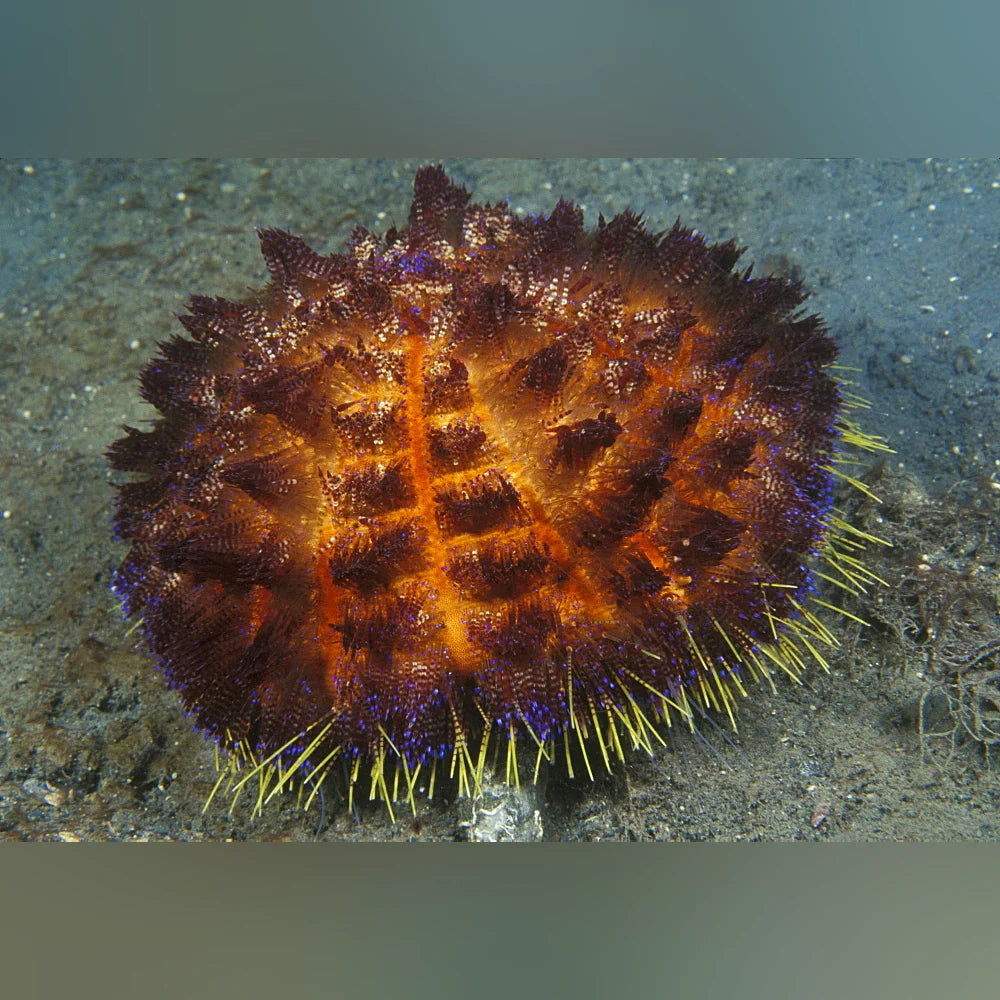
The name Red Urchin primarily refers to the species Mesocentrotus franciscanus (formerly Strongylocentrotus franciscanus), also known as the Giant Red Sea Urchin. This species is native to the temperate waters of the Northeastern Pacific Ocean, ranging from Alaska down to Baja California. As one of the largest urchins in the world, its test (shell) can reach over 7 inches (18 cm) in diameter, with spines up to 3 inches (8 cm) long, giving it an impressive overall size.
Due to its temperate origin, the Giant Red Urchin requires cooler water temperatures (ideally below 75°F/24°C) than most tropical reef systems. It is an extremely voracious herbivore in the wild, feeding primarily on kelp. In a home aquarium, its enormous appetite and size present a challenge: it is an exceptional algae grazer but must be kept in a very large, mature system with significant food resources and highly stable, cool water parameters. Smaller, tropical "Red Urchins" may refer to species like the Red Tuxedo Urchin (Mespilia globulus), a much smaller and more suitable tropical species.
The Red Urchin is a classic member of the clean-up crew, but its immense size means it can act as a bulldozer, knocking over unsecured rockwork, frags, and any small, loose decorations as it grazes. All rockwork must be securely anchored.
Diet & Compatibility:
- Diet: This animal is an absolute Herbivore / Algivore. Its primary diet is algae, which it scrapes off surfaces using its five-toothed jaw structure known as "Aristotle's lantern."
- Feeding: It requires a constant, plentiful supply of macroalgae or nuisance algae to survive. In tanks without sufficient growth, supplemental feeding is mandatory. Use large sheets of dried seaweed (Nori), blanched vegetables, or specialized urchin foods, target-fed by placing the food directly under the animal. Starvation is the most common cause of death for this species, leading to spine loss.
- Reef Compatibility: With Extreme Caution. The Red Urchin is generally safe with most corals, but its massive size and movement will knock over and damage unsecured corals, particularly small frags. It may also graze coralline algae heavily, completely cleaning rock surfaces. It is incompatible with triggerfish, pufferfish, and large predatory wrasses, which naturally prey on urchins.
- Temperament: Peaceful / Bulldozer. It is not aggressive toward other inverts or fish, but its size and movement through the tank are highly disruptive. Secure all rockwork and corals before introduction.
- Spine Note: The spines, while sharp and rigid, are not typically venomous, but a puncture wound can be painful and may require medical attention to prevent secondary infection.
Quick Facts
- Scientific Name: Mesocentrotus franciscanus (Giant Red Urchin)
- Primary Common Name: Red Urchin, Giant Red Sea Urchin
- Other Common Names: Giant Red Urchin
- Origin: Northeastern Pacific Ocean (Temperate - Alaska to Baja California)
- Max Size: 7-8 inches (18-20 cm) test diameter, with 3-inch spines.
- Temperament: Peaceful / Bulldozer (Highly disruptive grazer)
- Diet: Herbivore / Algivore (Requires heavy supplemental feeding in most tanks)
- Minimum Tank Size: 180+ Gallons (for Giant Red Urchin)
- Reef Compatibility: With Extreme Caution (Due to size and high grazing)
Share