AquariumFish.com
Freshwater fishRed Marlboro Discus
Red Marlboro Discus
Couldn't load pickup availability
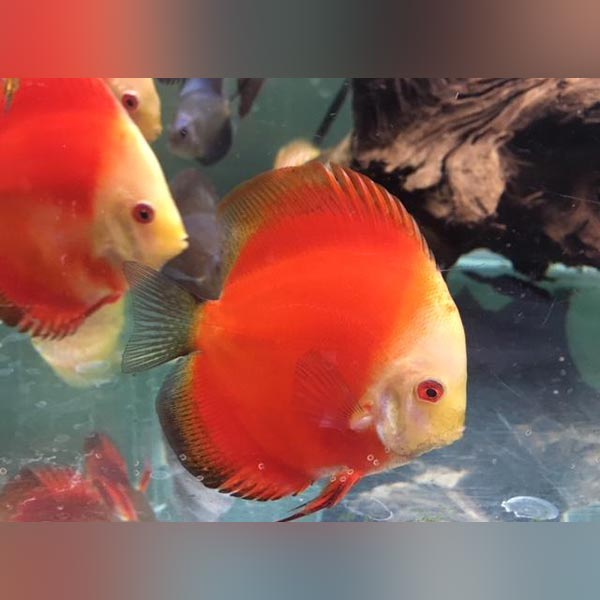
The red marlboro discus was bred by Jack Wattley and first called the Red Panda after the solid red body and cream color face. AquariumFish.com discus are bred in Singapore to handle a wide range of pH and eat pellet and frozen foods, and hold their color! Of course, discus love live blackworms and brine shrimp as treats. Always keep some frozen food available for new discus, as some take some time to feed on pellets. We feed our discus live and frozen worms.
Quick Facts
| Scientific Name | Symphysodon aequifasciatus (captive-bred color variety) |
| Origin | Amazon basin (captive-bred in Singapore) |
| Care Level | Moderate (needs warm, very clean water) |
| Temperament | Peaceful, shy; social |
| Adult Size | Up to 6–7" |
| Lifespan | 10+ years |
| Diet | Omnivore (meaty foods) |
| Water Temperature | 82–88°F |
| pH | 6.0–7.5 |
| Group Size | Does best in a group |
| Shipping Size | Approx. 1½–4" (by size option) |
Care Guide
Tank setup: Give them a reliable heater, gentle but strong filtration, and a bare bottom or fine sand for easy cleaning. Keep the tank in a quiet spot. Discus need very clean water.
Feeding: Feed small meals of quality discus pellets or granules a few times a day, and remove uneaten food within a few minutes, since leftovers quickly foul the water. They also enjoy frozen foods like bloodworms and brine shrimp. New arrivals may need frozen food for a while before they accept pellets.
Tankmates: Discus are calm and shy, so choose gentle tankmates that enjoy the same warm water: cardinal and rummynose tetras, sterbai corydoras and small plecos are popular choices. Avoid fast, boisterous or fin-nipping fish, and anything that competes hard for food. Many keepers avoid angelfish, which can bully discus and share diseases.
Living in groups: Discus are social and feel safest in a group. A single discus, or just two, tends to be stressed. When a pair forms to breed, they may claim part of the tank, so a group spreads out the attention.
Good to know: Red discus keep their brightest color with clean water, a varied diet and a color-enhancing discus food.
Share