SLA
Saltwater invertebratePink Urchin
Pink Urchin
Couldn't load pickup availability
Pink Urchin: The Red/Pink Tuxedo Algae Grazer
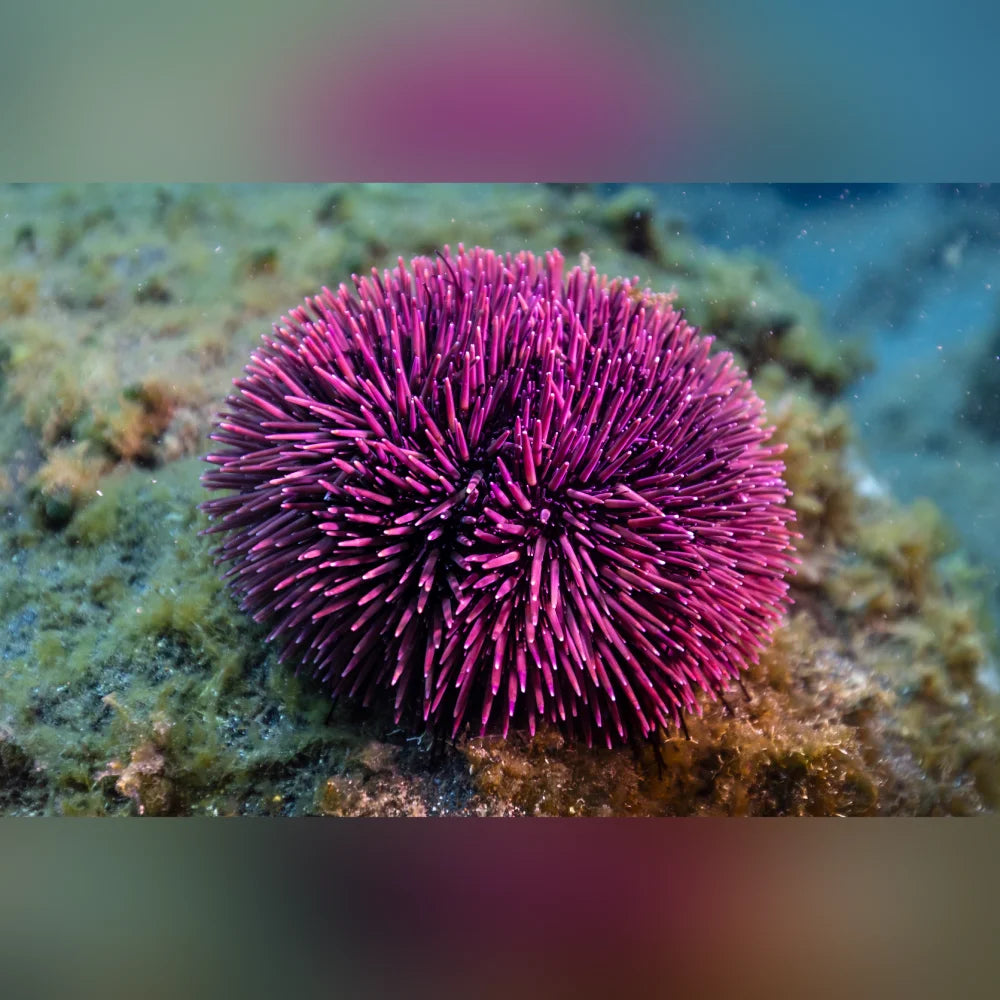
The Pink Urchin is a trade name for the reddish or pinkish color morph of the highly desirable Tuxedo Urchin, scientifically known as Mespilia globulus. Along with the blue/purple variant, this sea urchin is a favorite among aquarists for its relentless appetite for nuisance algae and its unique, ornamental appearance.
The "Pink" or "Red Tuxedo" variant features a test (body) with velvety blue or black bands alternating with rows of short, dense, light-colored spines that take on a reddish, tan, or pink hue. It is an extremely effective member of the cleanup crew, and its small size—reaching a maximum test diameter of about 3 inches (7-8 cm)—makes it suitable for established tanks as small as 20 gallons.
Like all members of its species, the Pink Urchin exhibits the charming behavior of a "decorator," covering its body with small pieces of shell, rubble, and even algae for camouflage. It requires stable water parameters and a mature system to thrive.
Diet & Compatibility:
- Diet: This animal is a committed Herbivore / Algivore. It is a key tool in controlling various forms of nuisance algae, including the dreaded hair algae and film algae, which it scrapes off the aquascape and glass with its specialized mouthparts.
- Feeding: The Pink Urchin relies on a constant supply of natural algae growth in the aquarium. In tanks where algae is low, particularly after it has successfully cleared an outbreak, its diet must be supplemented. Offerings should include dried seaweed (Nori) or algae wafers, spot-fed near the urchin to ensure it gets enough nutrition and to prevent starvation (often indicated by spine loss).
- Reef Compatibility: It is typically considered Reef Safe With Caution. While it will not eat healthy coral tissue, its movement may knock over small, unsecured coral frags, rocks, or unweighted equipment as it grazes and wedges itself into crevices. Coralline algae may also be grazed upon.
- Temperament: It is Peaceful and Solitary. It is non-aggressive and harmless to all fish, motile invertebrates, and healthy corals. Its spines are short and non-venomous.
- Tankmates to Avoid: Keep it away from all Urchin Predators such as Triggerfish, Pufferfish, large Wrasses, and Lionfish.
Quick Facts
- Scientific Name: Mespilia globulus
- Primary Common Name: Pink Urchin
- Other Common Names: Red Tuxedo Urchin, Globe Urchin, Pincushion Urchin, Sphere Urchin
- Origin: Indo-Pacific (Widespread)
- Max Size: 3 inches (7-8 cm) Test Diameter
- Temperament: Peaceful / Solitary (Non-Venomous)
- Diet: Herbivore / Algivore (Algae on rock and glass)
- Minimum Tank Size: 20+ Gallons (Requires established algae source)
- Reef Compatibility: With Caution (May move unsecured items)
Share