SLA
Saltwater fishOriental Sweetlips
Oriental Sweetlips
Couldn't load pickup availability
Oriental Sweetlips: The Challenging Giant
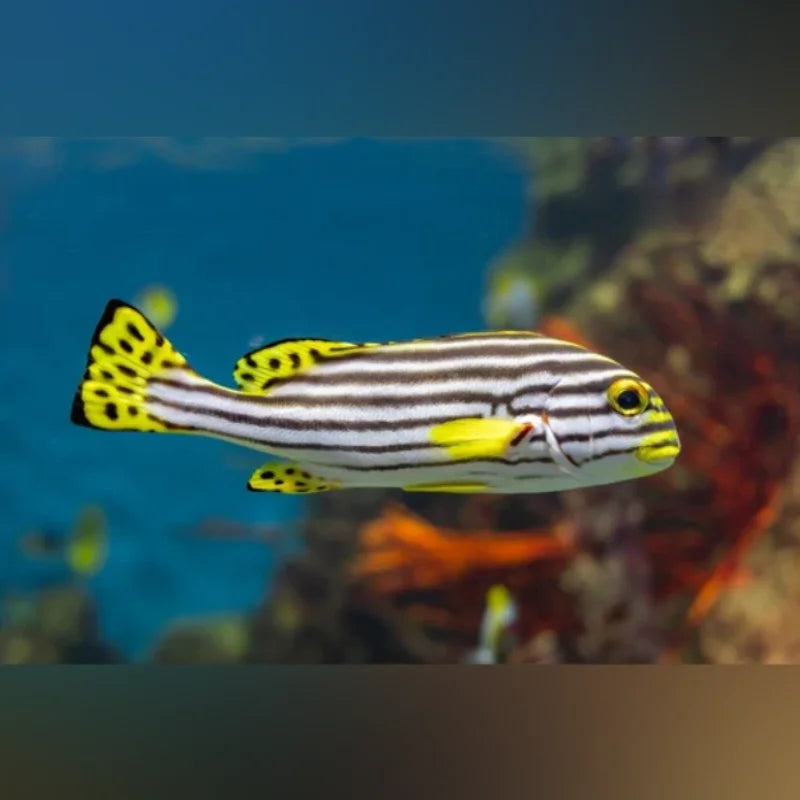
The Oriental Sweetlips (Plectorhinchus orientalis or Plectorhinchus vittatus) is a highly distinctive and sought-after marine fish, instantly recognizable by its dramatic color transformation from juvenile to adult. The juvenile is striking, featuring a mottled pattern of black, brown, and white that gives way to the adult's bold pattern of alternating white and thick black or brown horizontal stripes, complemented by bright yellow fins spotted with black.
Native to the Indo-Pacific, this species belongs to the Grunt family (Haemulidae), so named because they make a "grunting" noise by grinding their pharyngeal teeth. The Oriental Sweetlips grows to a massive maximum size, capable of reaching over 28 inches (72 cm) in the wild. Due to this extreme size, high bioload, and specialized care, a minimum aquarium size of 500 gallons (or much larger, ideally public aquarium scale) is required for long-term survival, making it unsuitable for most home aquarists.
This sweetlips is a nocturnal scavenger and predator and, despite its docile nature, poses one of the most significant challenges in the hobby. It is often a poor shipper, highly susceptible to disease, and notoriously difficult to wean onto prepared foods. Expert-only care is required to keep this magnificent species alive.
Diet & Compatibility:
- Diet: This is a dedicated Carnivore that feeds heavily on motile invertebrates (crustaceans, mollusks, worms) and small fish in the wild. The biggest hurdle in captivity is training it to accept non-live foods. It requires a diet of fresh, meaty foods such as frozen shrimp, squid, marine fish flesh, and blackworms. Live foods (like feeder shrimp) are often required initially to initiate a feeding response.
- Feeding: Due to their high metabolic rate and feeding difficulty, it is best to feed them multiple times per day. The sweetlips is a shy, bottom-feeding nocturnal grazer, and must be protected from more boisterous tankmates that will outcompete it for food.
- Reef Compatibility: It is Not Reef Safe. While the sweetlips may ignore corals, its large adult size, heavy waste production, and natural diet mean it will systematically hunt and consume nearly all ornamental invertebrates (shrimp, crabs, snails, worms) and any small fish in the tank. It is best housed in a large Fish-Only-With-Live-Rock (FOWLR) system.
- Temperament: It is generally Docile / Shy, despite its size. It should only be housed with large, peaceful tankmates that will not bully it but are not small enough to be eaten. It is solitary and should be kept singly.
- Special Care: This species is extremely sensitive during transport and acclimation. It requires exceptionally pristine water quality and excellent hiding places (large caves or overhangs) to reduce stress. Its large adult size means a high bioload which taxes filtration systems heavily.
Quick Facts
- Scientific Name: Plectorhinchus orientalis (P.vittatus)
- Primary Common Name: Oriental Sweetlips
- Other Common Names: Indian Ocean Oriental Sweetlips, Oriental Blubberlips
- Origin: Indo-Pacific (Widespread)
- Max Size: Up to 28+ inches (72+ cm)
- Temperament: Docile / Shy (Predatory)
- Diet: Carnivore (Must be converted to frozen meaty foods)
- Minimum Tank Size: 500+ Gallons (Expert / Public Aquarium Scale)
- Reef Compatibility: Not Reef Safe (Will eat invertebrates and small fish)
Share