SDC
Saltwater invertebrateOrange Leg Hermit Crab
Orange Leg Hermit Crab
Couldn't load pickup availability
Orange Leg Hermit Crab: The Striped Scavenger
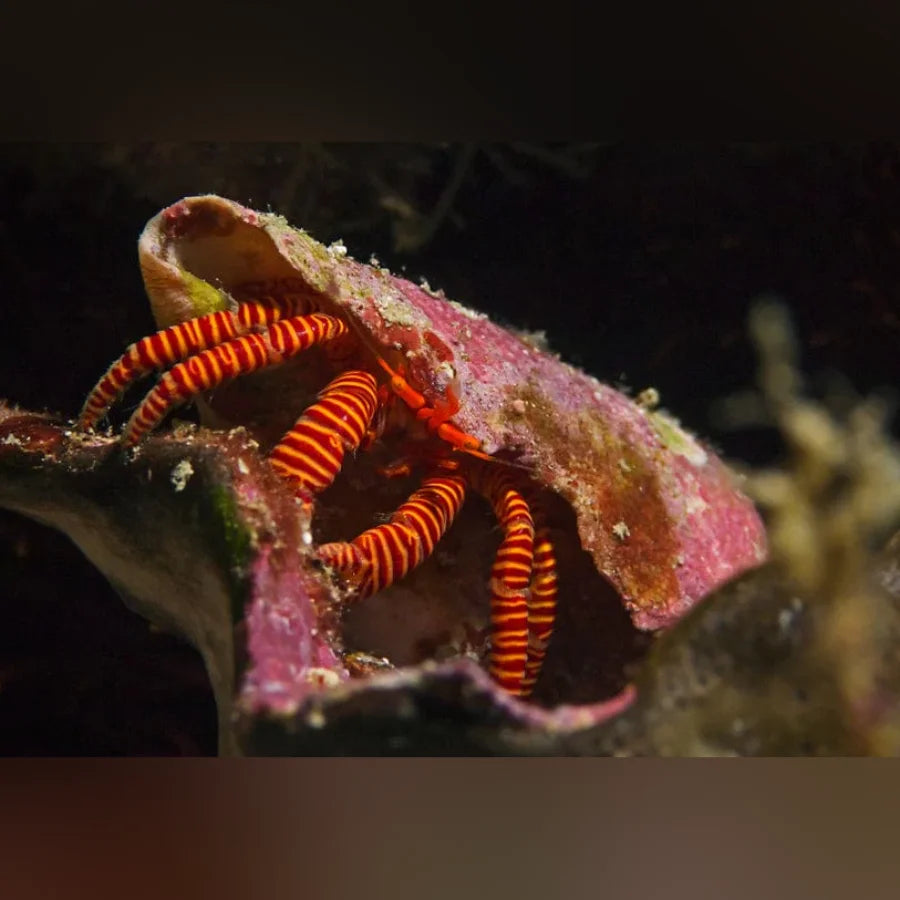
The Orange Leg Hermit Crab (Ciliopagurus strigatus), more famously known in the hobby as the Halloween Hermit Crab, is one of the most vividly colored and beneficial members of a marine clean-up crew. Its legs are adorned with striking, bold bands of bright orange and deep red, contrasting with a white carapace (back shield).
Originating from the Indo-Pacific, this hermit crab is a hardy and active scavenger. It is an excellent choice for keeping algae and detritus levels in check. The Orange Leg Hermit Crab is a relatively large species of hermit, reaching a maximum body length of up to 2 inches (5 cm), which means it will inhabit substantial discarded shells.
Due to its size, it is recommended for aquariums of 15 gallons or larger. This crab is particularly valued for its appetite for nuisance algae, including green hair algae and cyanobacteria, making it a highly functional addition to both Fish-Only-With-Live-Rock (FOWLR) and reef systems.
Diet & Compatibility:
- Diet: This crab is an Omnivore and a tireless scavenger. Its primary function in the aquarium is to consume filamentous algae, cyanobacteria, detritus, and any uneaten fish food that settles on the substrate or rockwork.
- Feeding: While it is an excellent grazer, it should be supplemented with sinking meaty foods (like frozen shrimp, clam, or scallop) and plant matter (dried seaweed/Nori) if algae levels drop too low. Underfed hermits are more prone to aggression and may look for a live snail to steal its shell.
- Reef Compatibility: It is Reef Safe With Caution. It does not eat coral. However, due to its larger size, it can be clumsy and may accidentally knock over small or unsecured coral frags and rockwork as it forages.
- Temperament: It is generally Peaceful to Semi-Aggressive. It coexists well with most fish, but should not be housed with predatory fish (Puffers, Triggerfish, large Groupers) that will easily eat it. It is known to become aggressive toward smaller, more docile bottom-dwellers (like small gobies or mandarins) and other snails if it is hungry or in need of a larger shell.
- Shell Supply: It is critical to provide an ample supply of empty shells (especially empty cone-shaped snail shells) of varying sizes that are slightly larger than its current home. This prevents it from attacking snails for their shells.
Quick Facts
- Scientific Name: Ciliopagurus strigatus
- Primary Common Name: Orange Leg Hermit Crab
- Other Common Names: Halloween Hermit Crab, Striped Hermit Crab
- Origin: Indo-Pacific (Widespread, including Hawaii and Philippines)
- Max Size: 2 inches (5 cm) body size
- Temperament: Peaceful to Semi-Aggressive (Scavenger)
- Diet: Omnivore (Algae, Detritus, Meaty Foods)
- Minimum Tank Size: 15+ Gallons
- Reef Compatibility: With Caution (May knock over unsecured items)
Share