1
/
of
2
SLA
Saltwater invertebrateLong Spine Urchin
Long Spine Urchin
Regular price
73.49
Shipping calculated at checkout.
Quantity
Couldn't load pickup availability
Long Spine Urchin: The Algae Sentinel
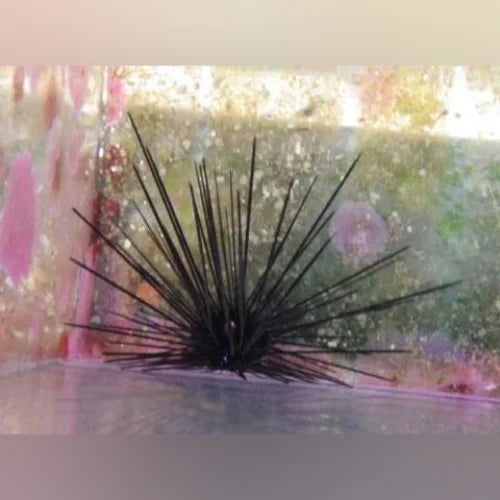
The Long Spine Urchin (Diadema antillarum) is one of the most ecologically important herbivores on Caribbean reefs and an unparalleled member of the marine cleanup crew. Characterized by its extraordinarily long, thin, and brittle spines, which can reach up to 12 inches (30 cm), this echinoderm is an essential utility animal for controlling nuisance algae in large, well-established reef aquariums.
In the wild, this urchin is known to graze on algae, clearing surfaces for new coral growth. Due to its large size (test body up to 4 inches, plus spines) and the potential for a sting, it is generally recommended for the experienced aquarist with a large system.
Diet & Compatibility:
- Diet: This species is a dedicated, voracious Herbivore that feeds primarily on algae, including hair algae, film algae, and turf algae. It uses a powerful mouth structure called Aristotle’s lantern to scrape and consume the algae.
- Feeding in Captivity: In tanks with heavy algae growth, the urchin is largely self-sufficient. In cleaner tanks, its diet must be supplemented with dried seaweed (nori) or algae wafers, as a starved urchin may begin to graze on coralline algae or, in extreme cases, soft corals or coral spat.
- Reef Compatibility: It is Reef Safe With Caution. The Long Spine Urchin will not intentionally predate on corals or fish. However, its large size and powerful grazing can lead to a "bulldozer effect," where it accidentally knocks over unsecured coral frags, small anemones, and unstable rockwork. All corals must be firmly glued down. It will also consume desirable coralline algae.
- Temperament: Peaceful (but venomous). It is nocturnal, hiding in rock crevices during the day and emerging at night to graze. It is an excellent choice for tanks with aggressive fish (like large Tangs or Angels) that would otherwise consume smaller cleanup crew members like snails or shrimp.
- Venom Warning: The spines are sharp, extremely brittle, and contain a mild venom (comparable to a bee sting). The spine tips can easily break off inside the skin, causing pain, swelling, and potential infection. Never handle this urchin with bare hands; use thick gloves or tongs during any maintenance.
Quick Facts
- Scientific Name: Diadema antillarum
- Primary Common Name: Long Spine Urchin
- Other Common Names: Black Longspine Urchin, Long-spined Sea Urchin
- Origin: Caribbean, Western Atlantic
- Max Size: 10 to 12 inches (with spines)
- Temperament: Peaceful (Venomous Spines)
- Diet: Herbivore (Voracious algae grazer)
- Minimum Tank Size: 75 Gallons (to accommodate spine span)
- Reef Compatibility: With Caution (Bulldozes unsecured items)
No reviews
Share