AquariumFish.com
Saltwater fishJapanese Swallowtail Angelfish
Japanese Swallowtail Angelfish
Couldn't load pickup availability
Japanese Swallowtail Angelfish: The Reef-Safe Plankton Eater
The Japanese Swallowtail Angelfish (Genicanthus melanospilos), also commonly known as the Blackspot Angelfish or Spotbreast Angelfish, is a highly prized marine fish belonging to the Genicanthus genus. This species is unique among Angelfish because it is primarily a planktivore, feeding on small organisms suspended in the water column rather than grazing on benthic invertebrates and sponges.
This feeding specialization makes the Japanese Swallowtail one of the few angelfish species considered genuinely Reef Safe with little risk to corals or clam mantles, making it an excellent centerpiece for a mixed reef system.
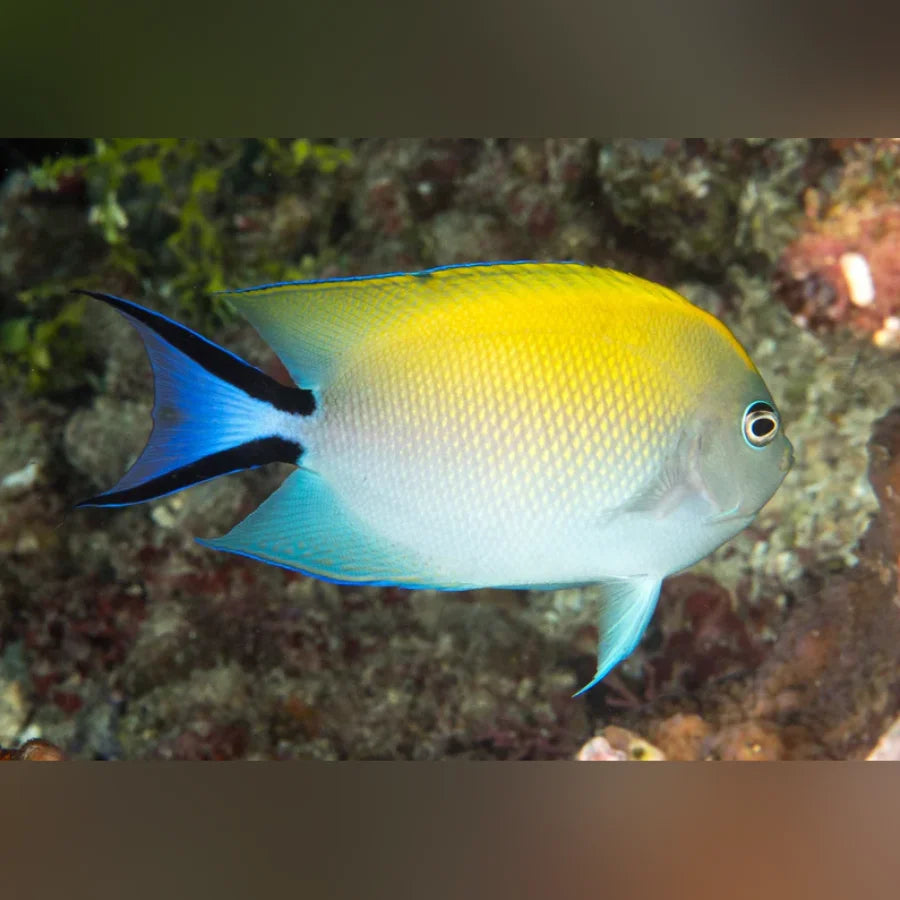
Like all Genicanthus, this fish exhibits strong sexual dimorphism and a protogynous social structure (females can change to male). The males are pale blue-white with numerous thin, black vertical stripes and a distinctive black spot on the breast. Females have a pale body with a contrasting yellow dorsal area and a deep black stripe outlining the top and bottom of their distinctive, forked (swallowtail) caudal fin. They can grow to a mature size of 7 to 9 inches (18−22 cm).
Diet & Compatibility:
- Care Level: Intermediate to Moderate. While not a beginner fish, its generally peaceful nature and easy conversion to prepared foods make it hardier than many other large angelfish.
- Temperament & Social Structure: Peaceful. They are one of the most docile angels and are best kept as a mated pair or in a harem of one male and several females. Housing two males in one tank is not recommended as they are territorial toward each other. They are compatible with most peaceful community fish.
- Diet: This fish is a dedicated Omnivore with a preference for planktonic foods. They must be fed small amounts frequently (2–3 times per day) to support their active, mid-water feeding style. Acceptable foods include high-quality, fortified angelfish flakes, pellets, frozen Mysis shrimp, enriched brine shrimp, and marine algae sheets (Nori or Spirulina).
- Minimum Tank Size: A spacious 100-125 gallon tank or larger is required to accommodate their active swimming behavior and size. They need plenty of open water space combined with ample live rock for shelter.
- Reef Compatibility: Excellent / Reef Safe. Unlike most other angelfish genera, Genicanthus species pose minimal risk to soft or stony corals, clam mantles, or other sessile invertebrates.
- Special Note: These active fish are known to jump when startled, so a securely fitted lid or aquarium cover is essential.
Quick Facts
- Scientific Name: Genicanthus melanospilos
- Primary Common Name: Japanese Swallowtail Angelfish
- Other Common Names: Blackspot Angelfish, Spotbreast Angelfish, Blackspot Lyretail Angelfish
- Origin: Western Pacific, Indonesia to Fiji, north to Ryukyu Islands
- Max Size: 7-9 inches (18−22 cm)
- Temperament: Peaceful (Territorial toward conspecific males)
- Diet: Omnivore / Planktivore (Must be fed frequently)
- Minimum Tank Size: 100-125+ Gallons
- Reef Compatibility: Reef Safe (Very low risk to corals)
Share