AquariumFish.com
Freshwater fishHifin Platy
Hifin Platy
Couldn't load pickup availability
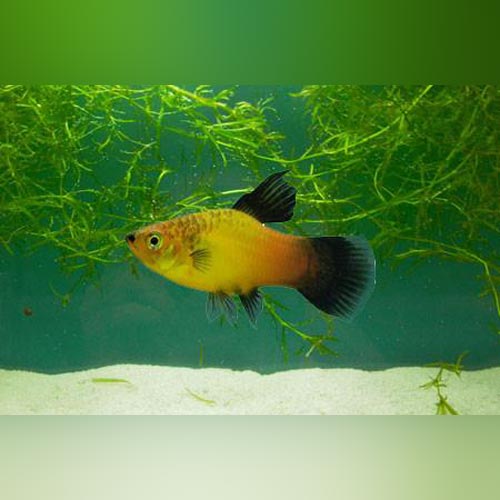
Hi fin platies have very extended dorsal fins. This platy variation is also called the topsail platy and the sailfin platy. We will do our best to match a color preference, and regardless, these platies will be delivered with great dorsal fins!
Quick Facts
| Scientific Name | Xiphophorus maculatus × X. variatus (hybrid) |
| Origin | Southern Mexico and Central America |
| Care Level | Easy, good for beginners |
| Temperament | Peaceful |
| Adult Size | Up to 2" |
| Lifespan | 3–4 years |
| Diet | Omnivore |
| Water Temperature | 70–80°F |
| pH | 7.0–8.2 |
| Minimum Tank Size | 10 gallons for a small group |
| Breeding | Livebearer – breeds easily in the aquarium |
| Shipping Size | Approx. 1¼" |
Care Guide
Tank setup: Platies are hardy and easy to keep. Give a small group at least a 10-gallon tank with a filter, a lid and plenty of plants. Use a heater to keep the water steady in the 70s. They prefer harder, slightly alkaline water. Change about 25% of the water every week.
Feeding: Feed a quality flake or small pellet once or twice a day, only as much as they eat in about two minutes. Platies also need plant matter, so include a vegetable or spirulina flake, plus treats of frozen or live brine shrimp and daphnia.
Tankmates: Platies get along with most peaceful community fish, such as other livebearers (mollies, guppies and swordtails), tetras, rasboras and corydoras. Avoid large or aggressive fish that may bully or eat them.
Breeding: Platies are livebearers, so a tank with males and females will almost certainly have babies (fry). Adults will eat fry, so add dense plants or use a breeding box if you want to raise them. Keeping two or three females per male gives the females a break from the males' attention.
Good to know: Their tall dorsal fins can attract fin-nippers, so skip tiger barbs and other nippy fish.
Share