SLA
Saltwater fishFormosa Wrasse
Formosa Wrasse
Couldn't load pickup availability
Formosa Wrasse: The Giant Reef Bulldozer
The Formosa Wrasse (Coris formosa), often sold as the Queen Coris Wrasse, is a spectacular but highly demanding species best suited for the very largest and most aggressive Fish Only With Live Rock (FOWLR) systems. Its care complexity comes from its eventual massive size, powerful burrowing habit, and aggressive, predatory nature.
This wrasse undergoes one of the most dramatic color changes in the marine world:
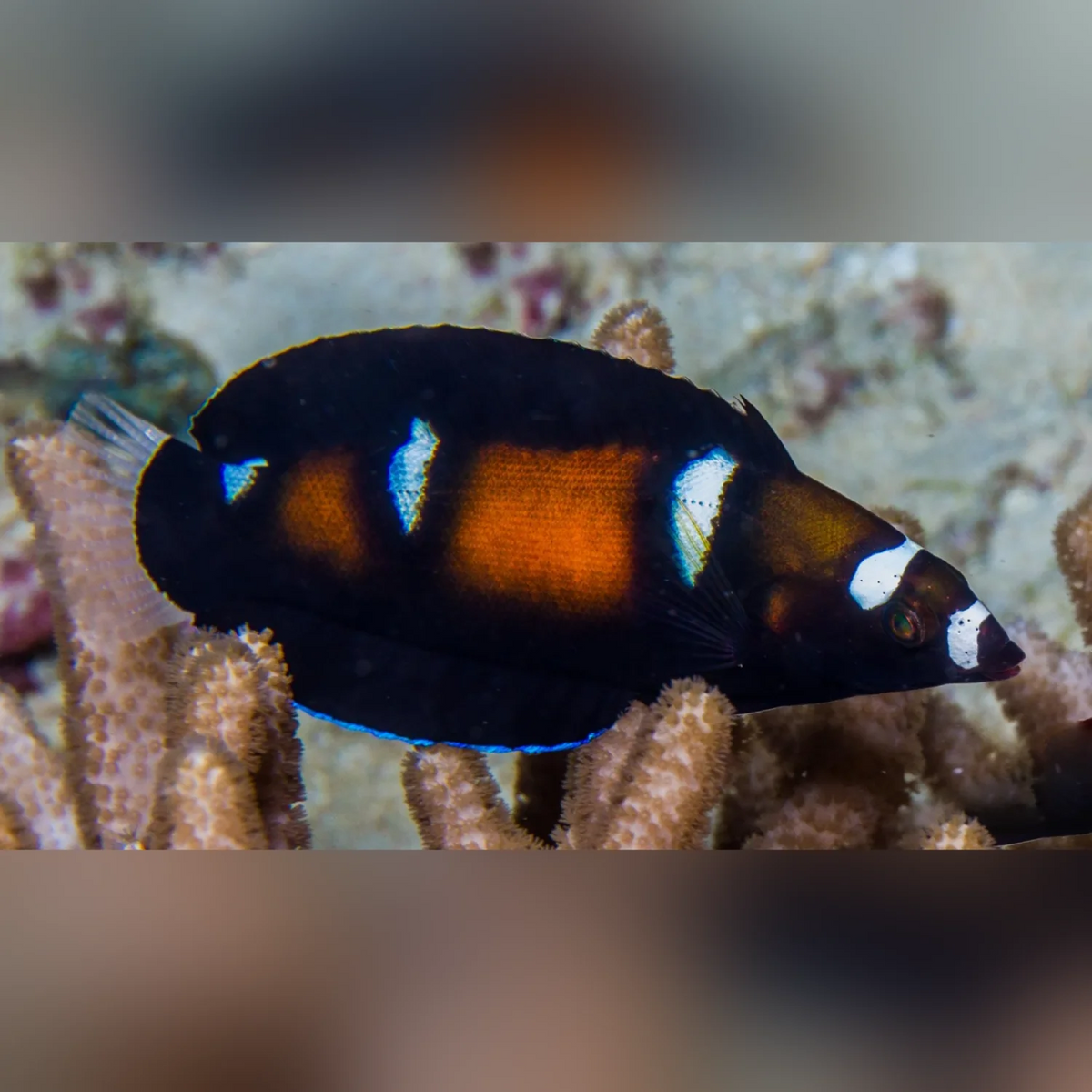
- Juveniles are incredibly colorful, featuring a bright orange-red body with distinctive white spots and a striking black and white striped tail. They are often sold at this small, manageable stage.
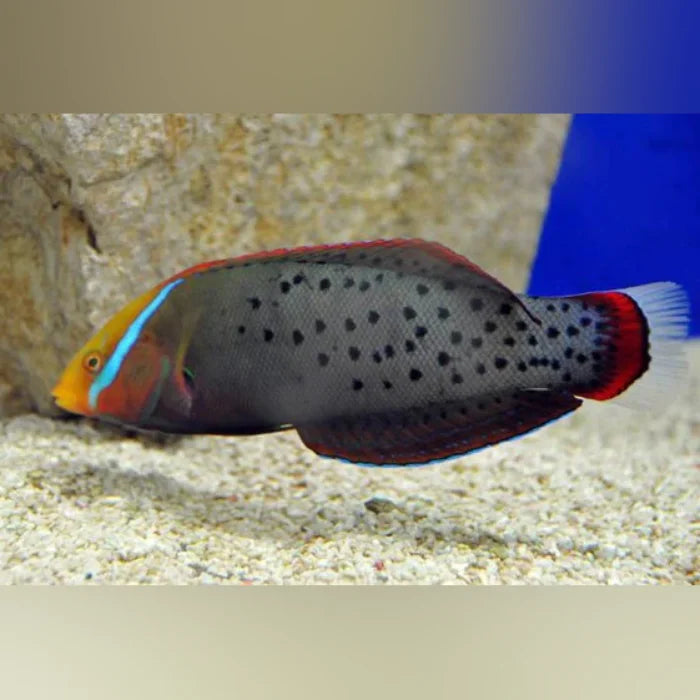
- Adults lose the red-orange and transform into a large, streamlined body with a silvery-gray/black base, accented by black dots, a green streak across a yellow face, and vibrant red-orange fins.
Growing up to an enormous size of 20–24 inches (50–60 cm), this fish is a powerful, inquisitive, and destructive species that must be planned for as an adult.
Diet & Compatibility:
- Diet: This is an aggressive Carnivore with a voracious appetite and high metabolism. Its natural diet is hard-shelled invertebrates like urchins, mollusks, and large crustaceans. It must be fed large amounts of varied, meaty foods 2-3 times per day, including krill, clam, chopped shrimp, squid, and high-quality pellets.
- Substrate Requirement: A deep sandbed (4–6 inches) of fine, soft substrate is critical. This wrasse is a sand-burrower, diving into the sand to sleep or hide. Coarse substrate will cause severe injury.
- Tank Environment / Activity: This fish is known as a 'rock-turner' or 'aquarium rearranger.' While foraging, it will pick up, turn over, and move rocks, rubble, and even small corals in its relentless search for prey. All rockwork must be stacked securely on the bottom glass to prevent collapses. A tight-fitting lid is also non-negotiable, as all Coris species are excellent jumpers.
- Reef Compatibility: Absolutely NOT Reef Safe. This species is predatory and will consume almost any ornamental invertebrate (shrimp, crabs, snails, sea stars, clams/tridacnas) and any fish small enough to fit into its mouth. It is only suitable for large FOWLR tanks.
- Temperament:** Aggressive and Bold. It should only be housed with large, aggressive tankmates like large Tangs, Triggers, Groupers, and marine Angels. It will aggressively chase and harass smaller or more docile fish.
Minimum Tank Size: 180 Gallons is considered the absolute minimum for a juvenile, but an adult requires a custom or commercial-sized system of 250 gallons or more to provide adequate swimming and burrowing space.
Quick Facts
- Scientific Name: Coris formosa
- Primary Common Name: Formosa Wrasse
- Other Common Names: Queen Coris Wrasse, Indian Ocean Wrasse
- Origin: Western Indian Ocean (Red Sea to South Africa, East to Sri Lanka)
- Max Size: 20–24 inches (50–60 cm)
- Temperament: Aggressive / Highly Predatory
- Diet: Carnivore (Hard-shelled invertebrates)
- Minimum Tank Size: 180+ Gallons (250+ ideal for adult)
- Reef Compatibility: No (Destructive; eats invertebrates and small fish)
Share