SLA
Saltwater invertebrateFlashing Electric Scallop
Flashing Electric Scallop
Couldn't load pickup availability
Flashing Electric Scallop: The Reef's Disco Ball
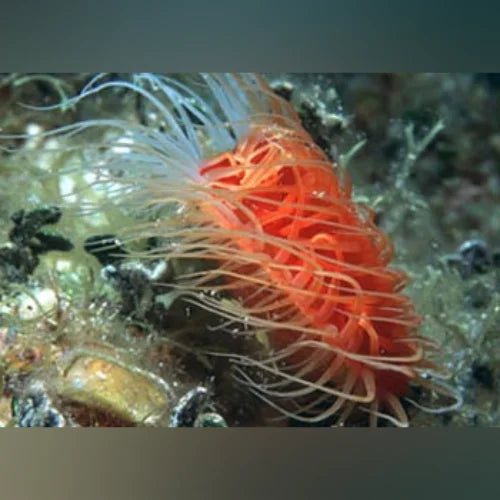
The Flashing Electric Scallop (Ctenoides ales), also known as the Disco Clam or Electric Flame Scallop, is a mesmerizing marine bivalve celebrated for its unique, pulsing "light show." This visual effect is not bioluminescence (light produced by the animal), but a structural coloration created by tiny, highly reflective silica nanospheres on the edge of its red mantle tissue. The clam rapidly furrows and unfurls this tissue, alternating between a highly reflective white side and a non-reflective dark side, creating the appearance of arcing, electric flashes.
Despite its common name, Ctenoides ales is a File Clam, not a true scallop. It features a fan-shaped shell, often mottled tan, which it uses to anchor itself into rock crevices using byssal threads. It also has long, vibrant red or orange tentacles extending from the mantle.
This species is native to the Indo-Pacific, where it is typically found hidden in dark, rocky caves and crevices, making the flashing display an effective predator deterrent (aposematism). Due to its specific feeding and environmental needs, the Flashing Electric Scallop is considered an Expert-Only invertebrate.
Diet & Compatibility:
- Diet: The Flashing Electric Scallop is a dedicated Non-Photosynthetic Filter Feeder (Planktivore). It relies completely on capturing fine particulate matter, including phytoplankton, zooplankton, and bacterioplankton, from the water column. Unlike many clams, it cannot survive on light alone.
- Feeding in Captivity: This is the most challenging aspect of its care. It requires a mature, densely stocked reef system with a dedicated refugium or daily, targeted supplemental feeding. Food must be small, liquid-based (e.g., concentrated phytoplankton, marine snow, live rotifers) and delivered directly upstream of its open mantle. If its food requirements are not met, it will starve.
- Placement & Movement: It must be placed in a secure, shaded crevice or cave in the rockwork where it receives moderate, indirect water flow and is protected from predators and high light. Though primarily sessile, it can "swim" short, jerky distances by rapidly clapping its valves together if threatened.
- Reef Compatibility: It is Reef Safe and peaceful. It will not harm corals or other invertebrates. However, it is highly vulnerable to predation or mantle-nipping. Do not house with aggressive fish like puffers, large angelfish, certain wrasses, or triggerfish. Its flashing is a defense mechanism.
- Water Flow: Requires moderate, indirect water flow to bring suspended food. Strong, direct currents can be detrimental.
- Care Level: Due to its constant and demanding nutritional requirements and sensitivity to water quality changes, this animal is strictly for Expert Aquarists.
Quick Facts
- Scientific Name: Ctenoides ales
- Primary Common Name: Flashing Electric Scallop
- Other Common Names: Disco Clam, Electric Flame Scallop, File Clam
- Origin: Indo-Pacific (Widespread)
- Max Size: 3−4 inches (7.5−10 cm)
- Temperament: Peaceful
- Diet: Non-Photosynthetic Filter Feeder (Planktivore)
- Minimum Tank Size: 30 Gallons (Requires a mature system)
- Reef Compatibility: Yes (Must be protected from predators)
- Lighting Requirement: Low to Moderate (Prefers shaded location)
- Care Level: Expert Only
Share