SLA
Saltwater invertebrateCamel Shrimp
Camel Shrimp
Couldn't load pickup availability
Camel or Dancing Shrimp: The Red-Striped Reef Risk
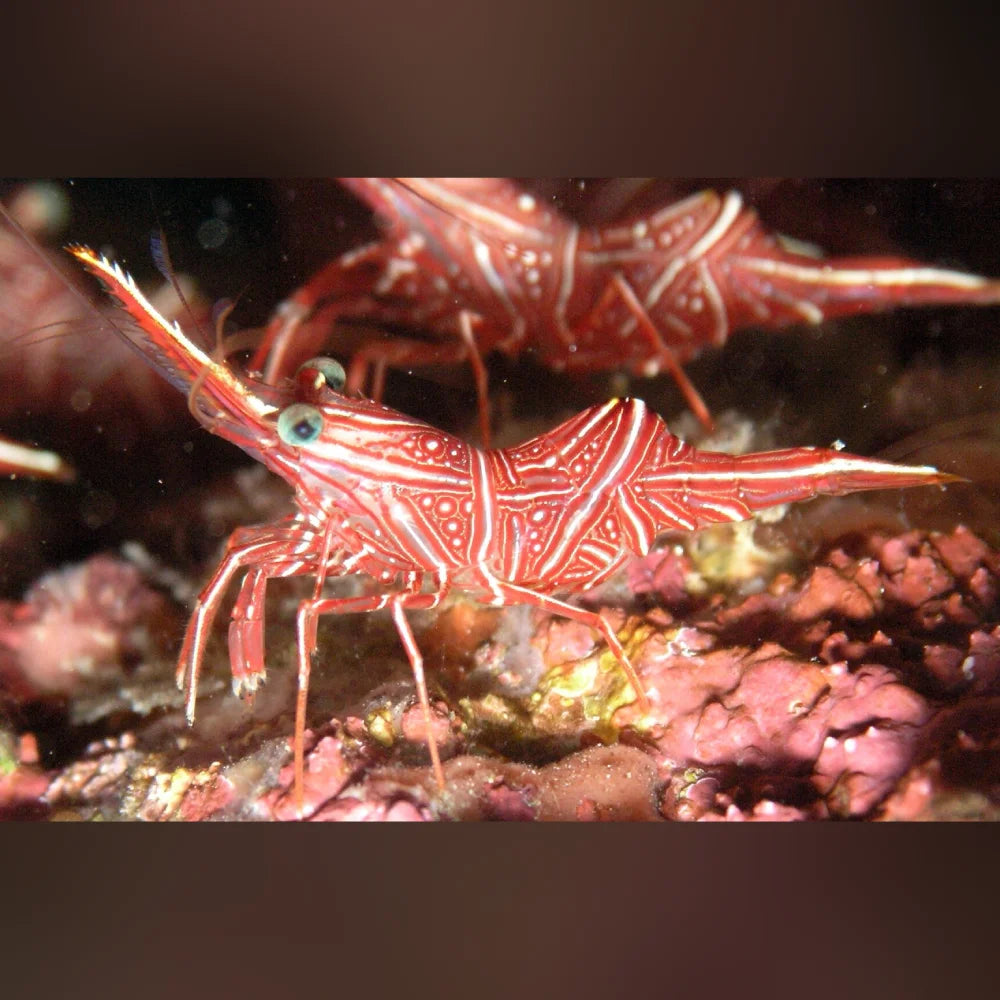
The Camel Shrimp, which primarily refers to two popular species, the Durban Dancing Shrimp (Rhynchocinetes durbanensis) and Urita's Dancing Shrimp (Rhynchocinetes uritai), is a striking invertebrate from the Indo-Pacific. It is known by many common names, including Hinge-beak Shrimp and Candy Shrimp, due to its variable pattern of bright red and white stripes on a translucent body.
These shrimp are easily identified by their distinct body shape: a hump-backed appearance and a hinged, upward-jutting rostrum (beak) on their head. Their common name "Dancing Shrimp" comes from their characteristic jerky, rhythmic bobbing and swaying motion, especially when stationary.
While hardy and an effective scavenger, the Camel Shrimp is generally considered not reef safe and is best suited for Fish-Only-With-Live-Rock (FOWLR) systems. It is a nocturnal species, preferring to hide in caves and crevices during the day and becoming most active at night to scavenge.
Diet & Compatibility:
- Diet: The Camel Shrimp is an Omnivore and an opportunistic scavenger. In the aquarium, it will readily consume detritus, uneaten fish food (flake, pellet, and frozen), and small organisms. They should be offered a varied diet of frozen mysis shrimp, brine shrimp, and other meaty foods daily, especially at dusk, to discourage polyp nipping.
- Reef Compatibility: It is generally considered Not Reef Safe. This is the key caution for this species. Unlike the true Peppermint Shrimp (Lysmata wurdemanni), which is often confused with it, the Camel Shrimp is known to nip and consume the polyps of soft corals, colonial anemones (like Zoanthids), and Disc Anemones (Mushrooms). While they generally leave hard (SPS/LPS) corals alone, their risk to soft corals makes them unsuitable for most mixed-reef tanks.
- Temperament: It is Peaceful toward non-aggressive fish and other invertebrates too large to be prey. They are social and do best when housed in small groups of 3 or more. Avoid housing them with known crustacean predators like Lionfish, Hawkfish, and some large Wrasses.
- Molting: Like all shrimp, they will periodically shed their exoskeleton (molt) to grow. This requires stable water conditions and the presence of Iodine and Magnesium for proper shell hardening. They are vulnerable during this time and require ample rockwork for secure hiding spots.
- Caution: Never use copper-based medications in an aquarium containing any invertebrates, including Rhynchocinetes species, as copper is highly toxic to them.
Quick Facts
- Scientific Name: Rhynchocinetes spp. (Common species are R. durbanensis and R. uritai)
- Primary Common Name: Camel Shrimp
- Other Common Names: Dancing Shrimp, Hinge-beak Shrimp, Candy Shrimp, Humpback Shrimp
- Origin: Indo-Pacific (Widespread)
- Max Size: 1.5 - 2 inches (4 - 5 cm)
- Temperament: Peaceful / Social
- Diet: Omnivore (Must be fed a meaty, varied diet)
- Minimum Tank Size: 20 Gallons (for a small group)
- Reef Compatibility: Not Reef Safe (Known to eat soft coral polyps and Zoanthids)
Share