AquariumFish.com
Freshwater fishBumblebee Cichlid
Bumblebee Cichlid
Couldn't load pickup availability
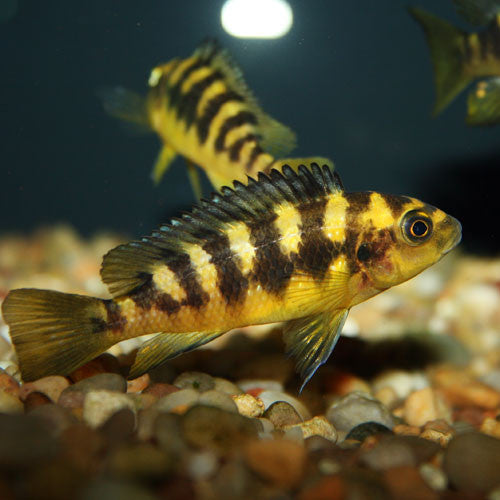
Just like the name, this "honey" of a fish has the coloration of a bumblebee. The bumblebee cichlid can handle aggressive cichlids like buttikoferi and zebras. It's a very active fish and seems to enjoy navigating the whole tank. Both males and females show the bold yellow and black pattern.
Quick Facts
| Scientific Name | Pseudotropheus crabro |
| Origin | Lake Malawi, Africa |
| Care Level | Moderate |
| Temperament | Aggressive (territorial rock-dweller) |
| Adult Size | Up to 5–6" |
| Lifespan | 6–10 years |
| Diet | Omnivore (needs plant matter) |
| Water Temperature | 76–82°F |
| pH | 7.8–8.6 |
| Shipping Size | Small: approx. 1" · Medium: approx. 2" · Jumbo: approx. 5" |
Care Guide
Tank setup: Use a sand or crushed-coral bottom and stack plenty of rockwork with caves and hiding spots so each male can claim a territory and others can escape. Lake Malawi and Lake Tanganyika cichlids need hard, alkaline water; crushed coral or aragonite sand helps hold the pH up.
Feeding: Mbuna are mostly plant eaters. Feed a vegetable-based flake or pellet once or twice a day, and avoid high-protein foods, which can upset their digestion.
Tankmates: Keep mbuna with other mbuna of similar size and temperament, stocked in a group to spread out aggression. Avoid mixing them with peaceful peacocks and haps unless the tank is large, and avoid closely related species that look alike, which can crossbreed.
Good to know: Bumblebee cichlids can change color, turning dark brown or black when stressed or showing dominance.
Share