SLA
Saltwater invertebrateBumble Bee Snail
Bumble Bee Snail
Couldn't load pickup availability
Bumble Bee Snail: The Striped Scavenger
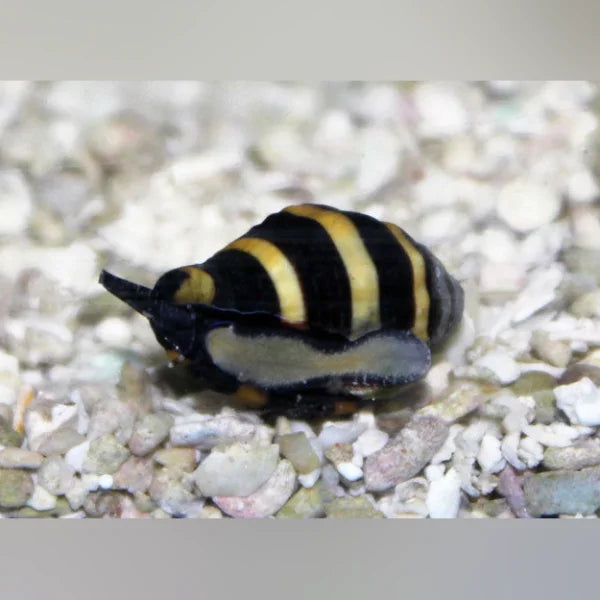
The Bumble Bee Snail (Engina mendicaria), also known as the Striped Engina or Wasp Snail, is a small, highly beneficial invertebrate prized by marine aquarists for its distinctive black and yellow/white striped shell. Resembling its namesake insect, this snail is an excellent member of the clean-up crew, offering both utility and aesthetic appeal due to its striking coloration.
Native to the sandy substrates and rocky shores of the Indo-Pacific, the Bumble Bee Snail is primarily a nocturnal scavenger. It uses a long, slender proboscis to hunt for food, primarily consisting of meaty detritus and dead organisms. At an adult size of only 0.5 to 1 inch (1.5-2.5 cm), it can easily maneuver into small crevices and burrow through the sand bed, aiding in substrate aeration.
The Bumble Bee Snail is sensitive to fluctuating water parameters, particularly high levels of nitrate, and must be drip-acclimated slowly upon introduction. They are generally hardy once established, making them a popular choice for both nano and large reef systems.
Diet & Compatibility:
- Diet: This snail is a dedicated Carnivore / Scavenger. Its primary diet consists of uneaten meaty fish food, detritus, and decaying organic matter. Unlike many other snails, it is not an algae eater. They are known to actively hunt and consume small worms, including nuisance bristle worms and vermetid snails, providing a valuable form of biological pest control.
- Feeding: In a well-fed tank, the Bumble Bee Snail will often find sufficient food in the sand and rock. If food is scarce, supplement their diet with finely chopped meaty foods like mysis or brine shrimp, or other frozen carnivore foods.
- Reef Compatibility: Yes. They are considered Reef Safe as they pose no threat to corals, clam tissues, or larger snails (such as Turbo or Nassarius). However, be aware that their carnivorous nature means they may prey on smaller snails (like tiny Cerith Snails) or small sand-dwelling invertebrates if severely underfed.
- Temperament: Peaceful. They are compatible with nearly all peaceful fish, shrimp, and other invertebrates. They should be kept with caution alongside known snail predators, such as certain species of Wrasses (e.g., Six-Line Wrasse), Puffers, or Triggerfish, which may view them as a meal.
- Tank Requirements: Requires a substrate (sand is preferred) for foraging and burrowing. A minimum of 5-10 gallons is sufficient for a small group due to their diminutive size.
Quick Facts
- Scientific Name: Engina mendicaria
- Primary Common Name: Bumble Bee Snail
- Other Common Names: Striped Engina, Wasp Snail
- Origin: Indo-Pacific
- Max Size: 0.5 – 1 inch (1.5-2.5 cm)
- Temperament: Peaceful (Carnivorous Scavenger)
- Diet: Carnivore / Scavenger (Detritus, uneaten meaty food, small worms)
- Minimum Tank Size: 5 Gallons
- Reef Compatibility: Yes (Excellent for consuming meaty detritus and vermetid snails)
Share