AquariumFish.com
Freshwater fishBulgarian Seal Point Angelfish
Bulgarian Seal Point Angelfish
Couldn't load pickup availability
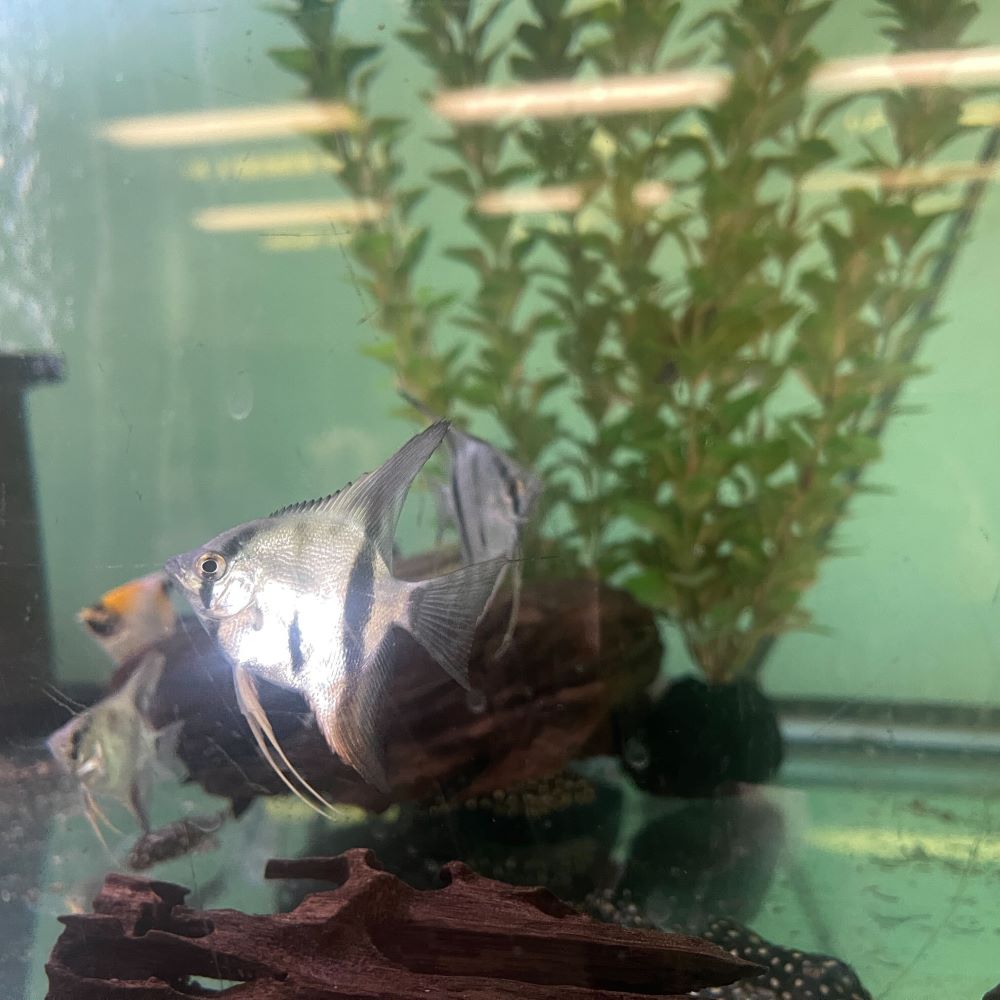
When the Iron Curtain fell over Eastern Europe in the Cold War, aquarium hobbyists in communist countries were left to their own devices and became adept breeders. Many natural genes of wild fish were isolated. Today, beautiful variations from that (hopefully) bygone era are found in the hobby. The Bulgarian gene promotes inky black fins on a cream or koi body. Seal Point angelfish have a cream body along with the distinct solid dark fins.
Note: Bulgarian Seal Point Angels may vary in appearance, typically distinguished by wide dark markings on the dorsal fin. Their body coloration can range from solid silver to silver with stripes.
Quick Facts
| Scientific Name | Pterophyllum scalare |
| Origin | Amazon basin, South America (captive-bred) |
| Care Level | Easy, good for beginners |
| Temperament | Semi-aggressive (territorial when pairing) |
| Adult Size | Up to 6" long and 8" tall |
| Lifespan | 10+ years |
| Diet | Omnivore |
| Water Temperature | 75–82°F |
| pH | 6.0–7.5 |
| Shipping Size | Approx. 2" |
Care Guide
Tank setup: Give them tall plants or driftwood, a heater and a gentle filter.
Feeding: Feed a quality flake or small pellet once or twice a day, only as much as they eat in a couple of minutes. They also enjoy frozen foods like bloodworms and brine shrimp.
Tankmates: Choose peaceful fish too large to swallow, such as larger tetras, corydoras, plecos, rams, gouramis and peaceful barbs. Avoid fin-nippers like tiger barbs, and small fish like neon tetras that adult angels may eat.
Breeding: Angelfish pair off and lay eggs on flat surfaces like broad leaves or slate. A breeding pair can become territorial, so give them room and places for other fish to retreat.
Good to know: Adult angelfish will eat any fish small enough to fit in their mouths, including neon tetras, so choose tankmates that are too big to swallow.
Share