SLA
Saltwater fishStarry Blenny
Starry Blenny
Couldn't load pickup availability
Starry Blenny: The Speckled Algae Patrol
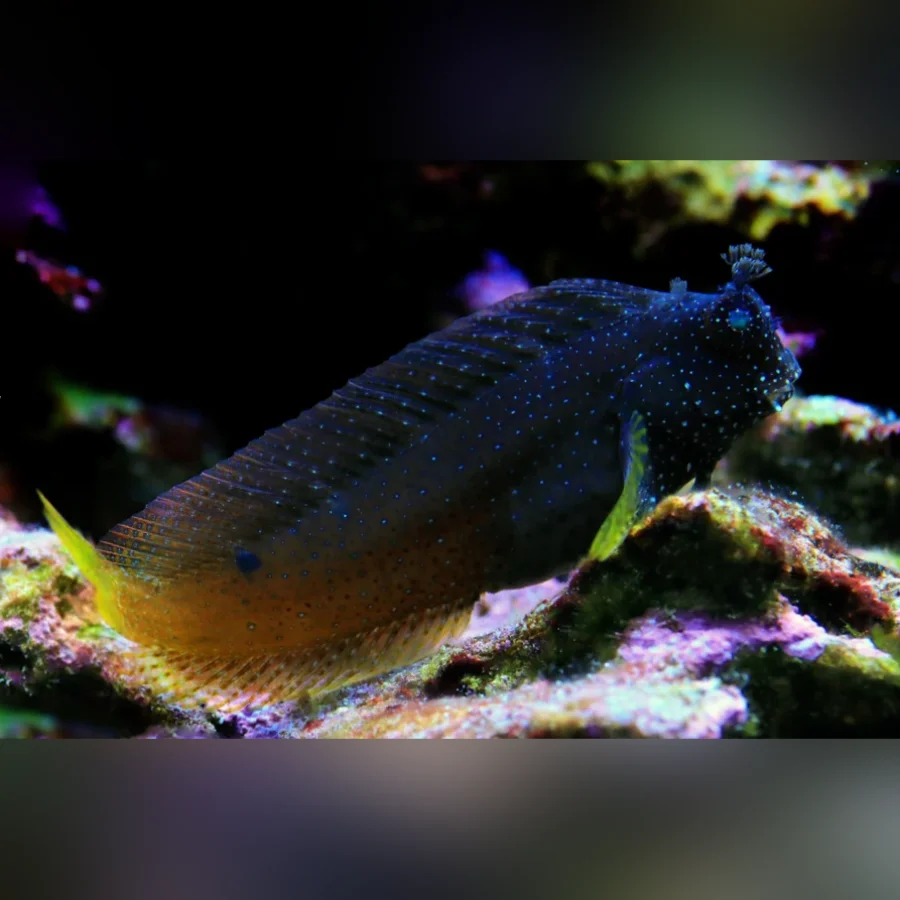
The Starry Blenny (Salarias ramosus), also known as the Snowflake Blenny, is a charming and industrious bottom-dweller, prized by aquarists for its striking looks and tireless algae-grazing habits. Its body features a beautiful, mottled dark brown or black base color covered with hundreds of tiny, brilliant white or light blue dots, resembling a night sky of stars. Combined with its expressive eyes and quirky personality, the Starry Blenny is a standout addition to any marine display.
This blenny is an excellent member of the clean-up crew, using its specialized comb-like teeth to graze continuously on nuisance filamentous algae and microalgae on live rock and tank glass. It is a perching fish, spending much of its time hopping across the rockwork and observing its surroundings.
The Starry Blenny is completely reef safe and generally peaceful, making it compatible with most non-aggressive tank mates. A minimum tank size of 30 gallons is suitable for a single specimen, provided the aquarium is well-established with ample live rock to support grazing.
As a dedicated herbivore, this species relies heavily on natural algae growth. While it will accept prepared foods, a varied diet of marine algae sheets (nori), Spirulina, and vegetable matter is crucial to prevent starvation, especially in cleaner tanks. They can be territorial toward other blennies or fish that share a similar diet, so it is best kept alone. Like all blennies, the Starry Blenny is a known jumper, and a secure, tight-fitting lid is mandatory.
Quick Facts
- Scientific Name: Salarias ramosus
- Common Names: Starry Blenny, Snowflake Blenny, Starry Lawnmower Blenny
- Origin: Indo-Pacific (Western Central Pacific)
- Max Size: 5 to 6 inches
- Temperament: Peaceful (Territorial toward blennies/similar grazers)
- Diet: Herbivore. Must have constant access to algae supplemented with nori and vegetable matter.
- Minimum Tank Size: 30 gallons
- Reef Safe: Yes, excellent for coral systems.
Share