1
/
of
1
SLA
Saltwater fishBlack Spotted Leopard Wrasse
Black Spotted Leopard Wrasse
Regular price
105.59
Shipping calculated at checkout.
Quantity
Couldn't load pickup availability
Black Spotted Leopard Wrasse: The Reef Specialist
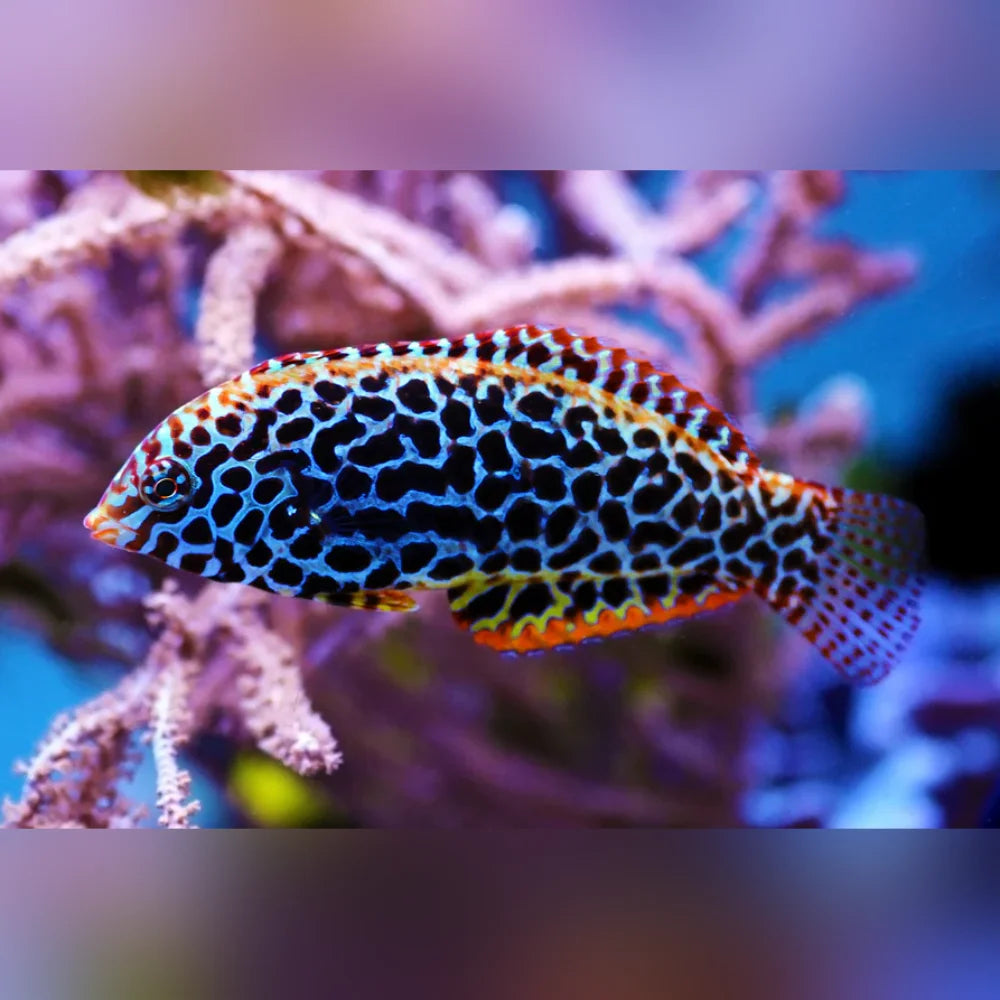
The Black Spotted Leopard Wrasse (Macropharyngodon meleagris) is one of the most popular, yet challenging, members of the Leopard Wrasse genus. It is also commonly known as the Leopard Wrasse or Guinea Fowl Wrasse, referring to the intricate, dark spotting across its body that resembles the plumage of a guinea fowl.
This small, peaceful fish displays beautiful sexual dimorphism:
- Females (Initial Phase): Typically feature a creamy-white to yellowish body with large, irregular black spots or blotches and orange to red accents on the fins.
- Males (Terminal Phase): Are more vividly colored, often with an orange or reddish background and rows of well-defined, pearlescent blue-green spots over the body and head.
Reaching a maximum size of only 6 inches (15 cm), the Leopard Wrasse is an extremely active daytime hunter, constantly exploring the rockwork for its micro-invertebrate prey. It is considered an Expert-Only fish due to its specialized dietary needs and high sensitivity to stress, particularly during shipping and acclimation.
Diet & Environment:
- Care Level: Expert Only. Success hinges on a well-established, mature ecosystem.
- Minimum Tank Size: 90–100 gallons or larger. The tank must be well-established for six months or more to ensure a stable supply of live micro-fauna.
- Substrate: Essential. A deep, fine, sugar-fine sandbed (at least 2–4 inches deep) is mandatory. This fish is a sand-burrower, diving into the substrate at night or when startled. Coarse or sharp substrate can injure its delicate body.
- Diet: Dedicated Carnivore/Micropredator. Its primary diet in the wild is copepods, amphipods, foraminiferans, and tiny snails found in the rock and sand. It is often very difficult to transition to prepared foods. It must be fed a varied diet of vitamin-enriched frozen foods (mysis shrimp, cyclop-eeze, copepods) several times daily, and a functioning refugium to culture live food is a significant benefit.
- Temperament: Peaceful. It is shy and should only be housed with non-aggressive tankmates that will not out-compete it for food or bully it.
- Reef Compatibility: Reef Safe With Caution. It does not harm corals, but it will systematically hunt and consume ornamental snails, small worms, and copepods. Its beneficial hunting of small parasitic snails (like Pyramid Snails) is often valued by reef keepers.
- Jumping Risk: Like all wrasses, it is a talented jumper. A tight-fitting lid is required.
Quick Facts
- Scientific Name: Macropharyngodon meleagris
- Primary Common Name: Blackspotted Leopard Wrasse
- Other Common Names: Leopard Wrasse, Guinea Fowl Wrasse, Spotted Wrasse
- Origin: Indo-Pacific (Widespread)
- Max Size: 6 inches (15 cm)
- Temperament: Peaceful (Requires non-aggressive tankmates)
- Diet: Carnivore/Micropredator (Needs live micro-fauna and multiple daily feedings)
- Minimum Tank Size: 90+ Gallons (Must be well-established)
- Reef Compatibility: Yes, but will eat small ornamental invertebrates (snails/pods).
Share