AquariumFish.com
Freshwater fishBlack Moscow Guppy (Pair)
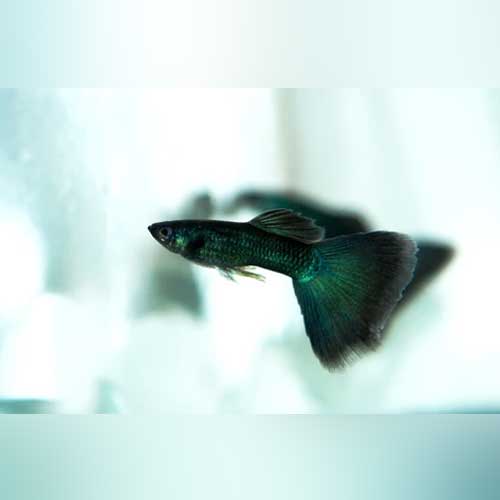
Black Moscow Guppy (Pair)
Couldn't load pickup availability
The coveted Black Moscow guppy has an interesting history. The half-black guppy was developed in East Berlin in the late 1960s. Quite a bit of breeding was done behind the Iron Curtain since it was very difficult - impossible actually - to import new varieties. That is one reason that even today many amazing killies, cichlids, guppies, and apistogrammas come from Central European breeders. Russian breeders took the half-black variety and were able to produce a full black male - very striking. These fish are still tough to breed but well worth the effort! Females have a little silver on the body, and not all offspring are full black; most, in fact, are half-black. Each order comes with one male and one female.
Quick Facts
| Scientific Name | Poecilia reticulata |
| Origin | Northern South America (captive-bred) |
| Care Level | Easy |
| Temperament | Peaceful |
| Adult Size | Up to 2" |
| Lifespan | 2–3 years |
| Diet | Omnivore |
| Water Temperature | 72–82°F |
| pH | 7.0–8.0 |
| Group Size | Sold as a pair (1 male + 1 female) |
| Shipping Size | Approx. 1" |
Care Guide
Tank setup: Give them a heater, a gentle filter and plenty of plants, including some floating plants where babies can hide. Guppies like slightly hard water.
Feeding: Feed a quality flake or small pellet once or twice a day, only as much as they eat in a couple of minutes. They also enjoy frozen foods like bloodworms and brine shrimp.
Tankmates: Guppies get along with other small, peaceful fish such as platies, mollies, corydoras, small tetras and rasboras. Avoid fin-nippers like tiger barbs and larger fish that could eat them.
Breeding: Guppies are livebearers and breed easily. Females give birth to live babies about once a month, and adults will eat the babies, so thick plants give them a place to hide.
Good to know: Moscow guppies are known for their solid, deep body color.
Share