SLA
Saltwater fishBicolor Parrotfish
Bicolor Parrotfish
Couldn't load pickup availability
Bicolor Parrotfish
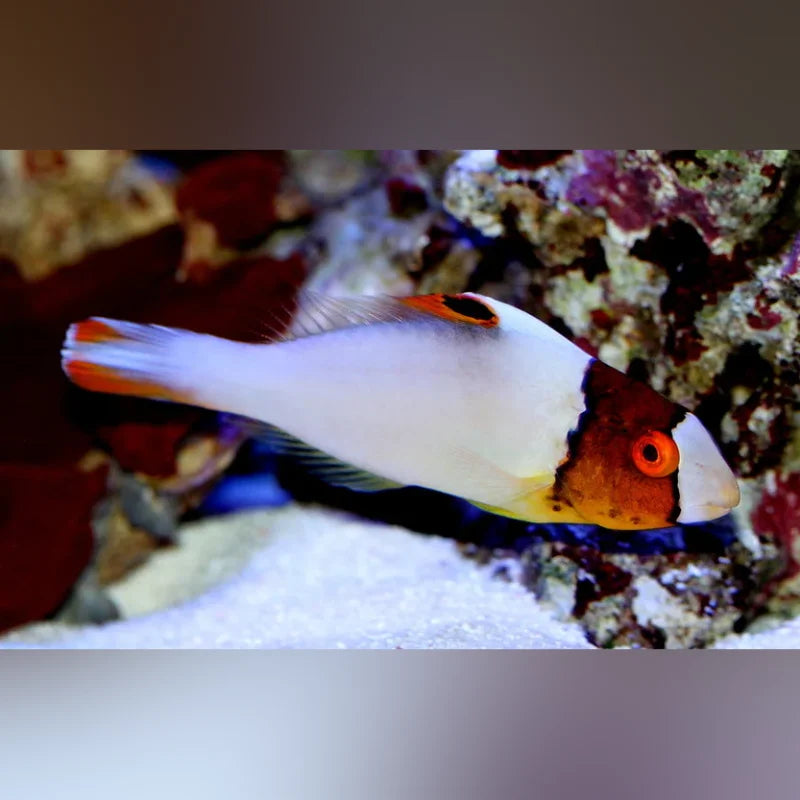
The Bicolor Parrotfish features dramatic color transformations, the juvenile phase features a striking white body with a broad orange band across the face and a prominent black eyespot on the dorsal fin. As it matures, it undergoes a complete change to the terminal phase male, becoming a beautiful green to blue-green with pink spots and markings.
This is a fish that is not suitable for most home aquariums due to its enormous adult size. The Bicolor Parrotfish can reach a massive length of 20 to 35 inches (50-90 cm) in the wild. As a result, only expert aquarists with commercial or public aquarium-sized systems (500+ gallons) should consider this species. Its common names include the Two-color Parrotfish and Bumphead Parrotfish.
Bicolor Parrotfish are protogynous hermaphrodites, not that there is anything wrong with that, starting life as females (initial phase) and changing into brightly colored males (terminal phase) as they mature. This species is a vital component of natural reef ecosystems, scraping algae from rocks and dead coral to create the fine sand found on beaches. First described - the zoological word for discovered - by a German naturalist named Eduard Ruppel when he was dissecting a group of various specimens from an excursion to the Red Sea in 1829.
Diet & Compatibility:
- Diet: The Bicolor Parrotfish is an Omnivore but relies heavily on Herbivorous grazing. Its primary diet is algae and the microscopic organisms it scrapes from rocks and dead coral skeletons using its specialized, beak-like dental plates. A continuous supply of mature algae growth is essential for its survival and health. Supplements must include copious amounts of high-quality vegetable matter, such as Nori/Seaweed sheets and commercial algae-based pellets and frozen preparations (like spirulina). Some meaty foods like chopped krill and shrimp can also be offered.
- Feeding: Due to its constant grazing nature, this fish must be fed multiple times a day (3+ feedings) with a constant supply of algae sheets available for grazing.
- Reef Compatibility: It is generally considered Not Reef Safe. While the fish primarily targets algae, its powerful beak and specialized feeding habit involve scraping calcareous material from the substrate. In a home reef tank, it will often turn its attention to live SPS and LPS corals, consuming the zooxanthellae within the coral tissue, leading to irreversible damage.
- Temperament: It is typically Peaceful toward non-Parrotfish tankmates, making it suitable for a very large, peaceful fish-only-with-live-rock (FOWLR) system. It can be territorial toward other Parrotfish or similar-looking species and should generally be housed alone or as a mated pair in a massive aquarium.
Quick Facts
- Scientific Name: Cetoscarus bicolor
- Primary Common Name: Bicolor Parrotfish
- Other Common Names: Two-colour Parrotfish, Bumphead Parrotfish
- Origin: Red Sea (The Indo-Pacific population is Cetoscarus ocellatus)
- Max Size: 20-35 inches (50-90 cm)
- Temperament: Peaceful (Territorial toward similar species)
- Diet: Omnivore/Herbivore (Heavy Algae Grazer)
- Minimum Tank Size: 500+ Gallons (Not suitable for most home aquariums)
- Reef Compatibility: Not Reef Safe (Will damage or consume live coral)
Share