SLA
Saltwater fishAlligator Pipefish
Alligator Pipefish
Couldn't load pickup availability
Alligator Pipefish
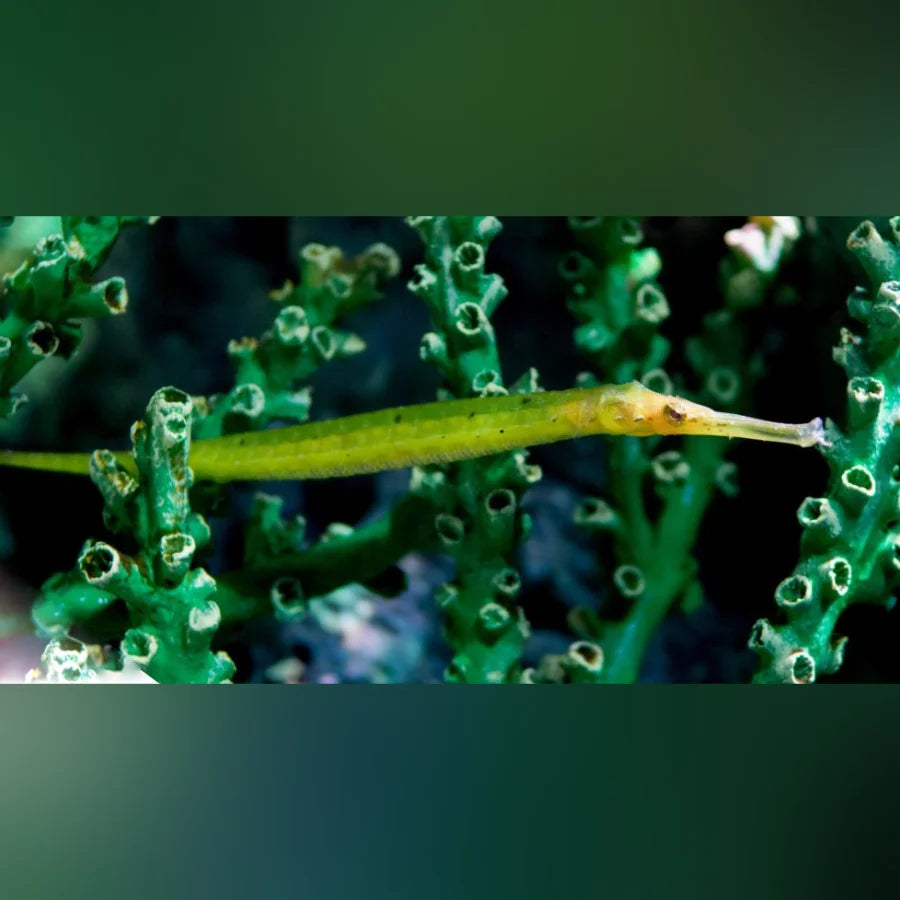
The Alligator Pipefish (Syngnathoides biaculeatus), also known as the Crocodile Pipefish or Double-ended Pipefish, is one of the largest and most captivating species in the Syngnathidae family (which includes seahorses). Named for its elongated, often green-to-brown body that resembles a small crocodile or alligator, this fish is a slow-moving, stealth predator highly adapted to life in seagrass meadows and floating macroalgae beds.
Native to the tropical and subtropical Indo-Pacific (from East Africa to Australia and Japan), the Alligator Pipefish is technically a "pipehorse" because, unlike true pipefish, its tail is prehensile—it can be used to grasp and anchor itself to vegetation, much like a seahorse. This large pipefish can reach an impressive maximum length of 11 to 14 inches (28-35 cm), requiring a specialized and spacious aquarium.
Keeping this species is challenging (moderate to expert care level) due to its specialized feeding requirements and need for a low-flow, peaceful environment.
Diet & Compatibility:
- Diet: This fish is a dedicated Carnivore with a tube-like snout used to suck small prey into its mouth. In the wild, it feeds exclusively on small crustaceans like amphipods and copepods ('pods') and zooplankton. In the aquarium, the biggest challenge is providing a consistent food source. They often must be trained to accept frozen, vitamin-enriched meaty foods such as frozen mysis shrimp, enriched brine shrimp, and copepods, but many specimens will only thrive on a continuous supply of live prey. A tank with an established refugium for live copepod production is essential.
- Feeding: They are weak competitors and slow eaters. They require multiple small feedings daily (2-3 times) of enriched food delivered directly to them, often with the help of a target feeder or pipette. Uneaten food must be removed immediately.
- Reef Compatibility: It is Reef Safe, as it will not bother corals. However, it is an Invertebrate Predator and will systematically hunt and consume smaller ornamental shrimp and crabs. It requires a specialized tank environment that mimics its natural seagrass/algae habitat.
- Temperament: It is Peaceful, but should only be housed with equally slow-moving, non-aggressive tankmates that pose no threat of competition for food. Ideal companions include seahorses, peaceful gobies (like Firefish), and dragonets (if the tank is large enough to support multiple pod feeders). Avoid all fast-swimming, aggressive, or stinging species (e.g., anemones, large corals).
- Sexing & Breeding: Males are slightly larger and possess the brood pouch on the underside of their abdomen where they carry the female's eggs until they hatch. They can be kept in pairs or small groups.
Quick Facts
- Scientific Name: Syngnathoides biaculeatus
- Primary Common Name: Alligator Pipefish
- Other Common Names: Crocodile Pipefish, Double-ended Pipefish, Pipehorse
- Origin: Indo-Pacific (Widespread)
- Max Size: 11-14 inches (28-35 cm)
- Temperament: Peaceful / Specialized (Target Feeding Required)
- Diet: Carnivore (Live Copepods/Amphipods, Frozen Mysis)
- Minimum Tank Size: 60-100+ Gallons (Specialized System)
- Reef Compatibility: Reef Safe (Avoid most ornamental inverts)
- Unique Feature: Prehensile tail (lacks a caudal fin) and male brooding.
Share