AquariumFish.com
Freshwater fishStar Sapphire Cichlid
Star Sapphire Cichlid
Couldn't load pickup availability
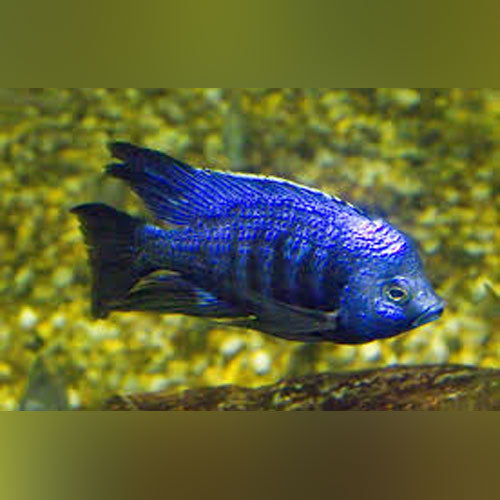
In the aquarium trade, most star sapphire cichlids are bred by domestic breeders and sold to AquariumFish.com and other aquarium retailers. Wild star sapphire cichlids are rare. Actually, bred star sapphire cichlids are rare. This cichlid is known for small white reflections like the gem of a sapphire, and the body is a deep blue. The star sapphire cichlid has a disposition similar to peacock cichlids and can be kept in a community African cichlid tank.
Quick Facts
| Scientific Name | Placidochromis phenochilus "Tanzania" |
| Origin | Lake Malawi, Africa |
| Care Level | Easy to moderate |
| Temperament | Semi-aggressive (males territorial) |
| Adult Size | Up to 7" |
| Lifespan | 8–10 years |
| Diet | Omnivore (protein-rich foods) |
| Water Temperature | 76–82°F |
| pH | 7.8–8.6 |
| Minimum Tank Size | 75 gallons for a group |
| Shipping Size | Small: approx. 1½" · Medium: approx. 2" · Large: approx. 3–4" |
Care Guide
Tank setup: Give them a long tank with a sand bottom, open swimming space in front and rockwork along the back. Lake Malawi and Lake Tanganyika cichlids need hard, alkaline water; crushed coral or aragonite sand helps hold the pH up. Change about 25% of the water every week.
Feeding: Feed a quality cichlid pellet or flake once or twice a day, plus frozen foods like brine shrimp, mysis and krill a few times a week.
Tankmates: Haps do well with peacocks and other haps of similar size, plus robust catfish like synodontis. Keep one male per similar-looking species, with several females, to limit fighting and crossbreeding.
Good to know: Males take a year or more to show full adult color, and color best when females are present.
Share