AquariumFish.com
Freshwater fishParadise Fish
Paradise Fish
Couldn't load pickup availability
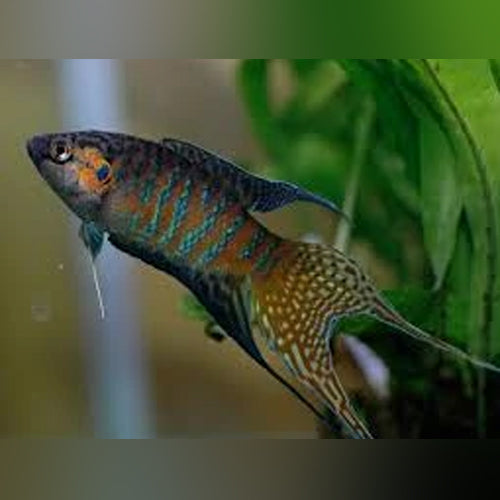
The paradise fish is one of the original aquarium fish. These fish were first imported from Vietnam to France for display in aquariums in 1869! The person responsible is early aquarium pioneer Pierre Carbonnier. Obviously, these are hardy fish to ship by ocean from Vietnam to France. Paradise fish show red and blue colors, and males have slightly more color than females, but both sexes are beautiful. Color patterns vary by breeder, so the picture is close but may not exactly match the fish we ship. Paradise fish will eat community flake food and are great planted tank and community tank fish, except that they are known to nip at female bettas and eat very small shrimp and fry.
Quick Facts
| Scientific Name | Macropodus opercularis |
| Origin | East Asia (China, Vietnam, Korea, Taiwan) |
| Care Level | Easy, good for beginners |
| Temperament | Semi-aggressive (males fight) |
| Adult Size | Up to 3–4" |
| Lifespan | 6–8 years |
| Diet | Omnivore |
| Water Temperature | 61–79°F (often fine without a heater) |
| pH | 6.0–8.0 |
| Minimum Tank Size | 20 gallons |
| Breathes Air | Yes – labyrinth fish take air from the surface |
| Shipping Size | Approx. 2" |
Care Guide
Tank setup: Give them at least a 20-gallon tank with plants and hiding places. They handle cool water, so a heater is optional in most homes. Keep a lid on the tank and leave a gap of air above the water, since gouramis breathe from the surface and warm, humid air protects their labyrinth organ. Change about 25% of the water every week.
Feeding: Feed a quality flake or small pellet once or twice a day, only as much as they eat in about two minutes. Add frozen or live foods like bloodworms, brine shrimp and daphnia a few times a week.
Tankmates: Males fight each other, so keep one male per tank. They do best with sturdy, similar-sized fish and should not be kept with bettas, very small fish or small shrimp.
Good to know: Paradise fish handle cool water and can live unheated, which is how they survived the long trip to become one of the first aquarium fish kept in Europe.
Share