SLA
Saltwater coralLong Tentacle Green Anemone
Long Tentacle Green Anemone
Couldn't load pickup availability
Long Tentacle Green Anemone: The Elegant Sand Dweller
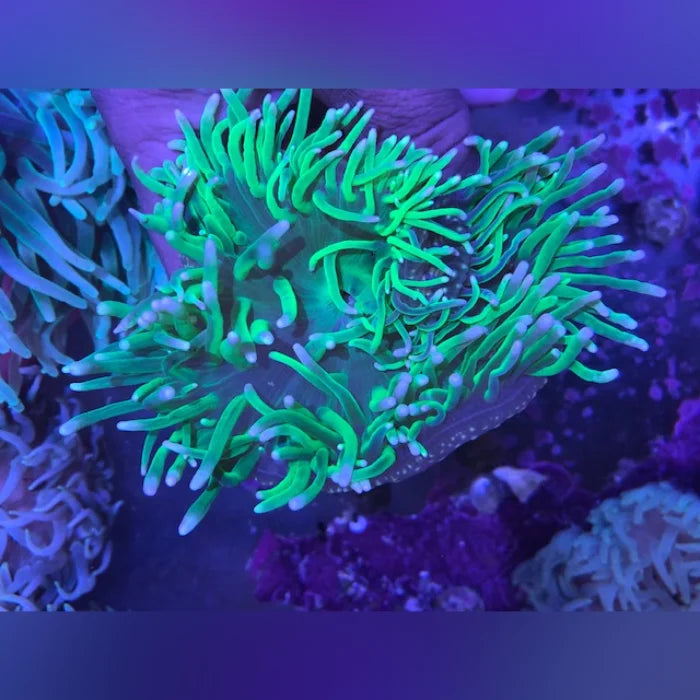
The Long Tentacle Green Anemone (Macrodactyla doreensis), often called the Corkscrew Anemone, Sand Anemone, or Red Base Anemone, is a popular and relatively hardy species known for its long, slender, and often wavy tentacles. This anemone typically features an oral disc with visible striping and a column base that is frequently a vibrant red or orange (the "Red Base" moniker), though its tentacles come in shades of green, tan, white, or purple.
Hailing from the shallow lagoons and sandy flats of the Indo-Pacific, this anemone buries its foot deep into the substrate, leaving only the oral disc and tentacles exposed. It can grow to a substantial size, reaching a diameter of 12 to 20 inches (30-50 cm), requiring a minimum tank size of 50 gallons to accommodate its size and territorial needs.
The Long Tentacle Green Anemone is considered a good choice for intermediate keepers who can provide stable water conditions, strong lighting, and the crucial deep sand bed it needs to thrive and anchor itself properly.
Diet & Compatibility:
- Diet: This anemone is a Photosynthetic Carnivore. It derives most of its energy from symbiotic algae (zooxanthellae) and requires moderate to high lighting. However, supplemental feeding is essential for long-term health and growth.
- Feeding: Feed 2-3 times per week with meaty foods, such as pieces of raw marine shrimp, clam, fish flesh, or anemone-specific pellets. The food item should be placed directly onto the oral disc.
- Substrate & Placement: A deep sand bed (at least 4–6 inches) is mandatory, as this species prefers to bury its foot for stability and protection. Without a proper substrate, it will wander. It is vital to keep all powerheads guarded or far away from its wandering path, as being sucked in is often fatal.
- Reef Compatibility: Reef Safe With Caution. This anemone will not actively target corals, but its venomous, sweeping tentacles will sting and kill any stationary coral or sessile invertebrate (like clams) they touch during movement or full expansion. It must be given a large, open area on the sand.
- Symbiosis: The Long Tentacle Anemone hosts several species of clownfish, including the Clarkii, Saddleback, and Pink Skunk clownfish ( Amphiprion perideraion ). The presence of a host clownfish can improve the anemone's long-term health.
- Handling Warning: Like all anemones, it possesses stinging nematocysts. Always use gloves during maintenance, and never expose the anemone to air during transfer, as this can cause internal damage.
Quick Facts
- Scientific Name: Macrodactyla doreensis
- Primary Common Name: Long Tentacle Green Anemone
- Other Common Names: Corkscrew Anemone, Sand Anemone, Red Base Anemone
- Origin: Indo-Pacific
- Max Size: 12–20 inches (30–50 cm)
- Temperament: Semi-Aggressive / Stinging (Motile)
- Diet: Photosynthetic Carnivore (Requires strong light and target feeding)
- Care Level: Moderate
- Minimum Tank Size: 50+ Gallons
- Reef Compatibility: With Caution (Stings nearby corals)
Share