SLA
Saltwater invertebrateHalloween Hermit Crab
Halloween Hermit Crab
Couldn't load pickup availability
Halloween Hermit Crab: The Striped Scavenger
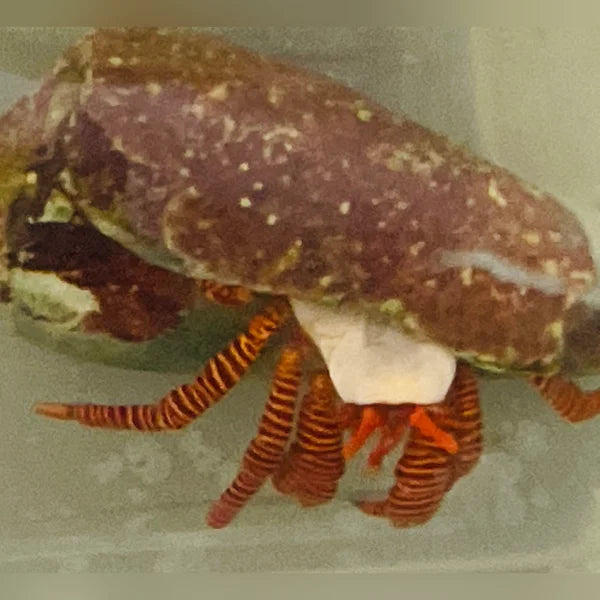
The Halloween Hermit Crab (Ciliopagurus strigatus) is a distinct and visually stunning invertebrate for the marine aquarium. It is easily identified by its striking coloration, featuring bright orange to dark red legs with black or dark red stripes, giving it its festive common name. Unlike many other hermits, this species has a noticeably flattened body shield, making it uniquely suited to inhabit cone-shaped snail shells (Conus shells) in the wild.
Native to the Indo-Pacific region, the Halloween Hermit Crab is one of the larger reef-safe hermit crabs, reaching a maximum size of up to 2 inches (5 cm) excluding the shell. It is a highly effective, robust scavenger and an excellent member of a clean-up crew, particularly known for its appetite for nuisance algae and detritus.
While generally peaceful, due to its larger size, this crab can be a bit clumsy and may inadvertently topple unsecured corals or rockwork, necessitating secure placement of tank decorations.
Diet & Compatibility:
- Diet: The Halloween Hermit Crab is an Omnivore / Scavenger. It consumes a varied diet of detritus, uneaten fish food, and algae. It is highly valued for eating problematic algae, including green hair algae (filamentous algae) and cyanobacteria (red slime algae).
- Feeding: As a larger scavenger, its appetite is substantial. It is essential to supplement its diet, especially in a clean tank, with quality marine pellets, algae wafers, and meaty frozen foods like mysis shrimp or raw table shrimp to prevent it from preying on small tankmates.
- Shell Supply: It is imperative to provide a constant supply of empty, appropriately sized cone-shaped shells for the crab to move into as it grows. A lack of new homes will increase the risk of the hermit attacking and killing snails (especially conch snails) for their shells.
- Reef Compatibility: It is considered Reef Safe With Caution. It will not eat corals, but its larger size and penchant for climbing may cause it to knock over or damage loosely placed corals, particularly small polyps or frags.
- Temperament: It is Semi-Aggressive / Predatory. While typically non-aggressive toward large fish, it may pose a risk to small, slow-moving, or bottom-dwelling fish (like gobies or dragonets) if underfed or very hungry. It should also be kept away from predatory fish like Puffers or Triggerfish, which will eat the crab.
Quick Facts
- Scientific Name: Ciliopagurus strigatus
- Primary Common Name: Halloween Hermit Crab
- Other Common Names: Striped Hermit Crab, Orange-Legged Hermit Crab, Cone Shell Hermit Crab
- Origin: Indo-Pacific (Widespread)
- Max Size (Body): Up to 2 inches (5 cm)
- Temperament: Semi-Aggressive / Predatory (Clumsy)
- Diet: Omnivore / Scavenger (Consumes hair algae and cyanobacteria)
- Minimum Tank Size: 15 Gallons
- Reef Compatibility: With Caution (May knock over corals; must provide empty shells)
Share