AquariumFish.com
Freshwater fishCrystal Red Shrimp
Crystal Red Shrimp
Couldn't load pickup availability
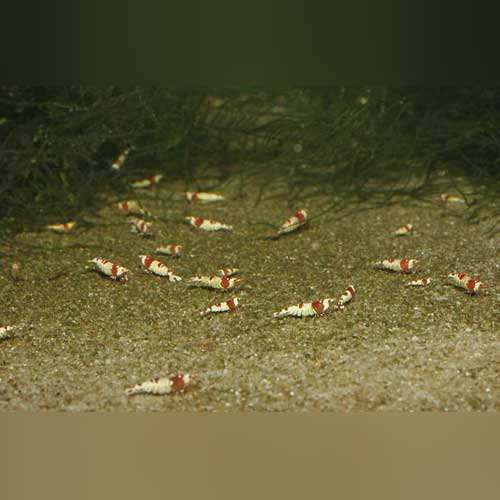
In shrimp language, grade S is better than grade B or even grade A: a more distinct color pattern, and it will develop to a better size. Our shrimp are S grade. Do not keep fancy shrimp with cichlids of any kind; to those fish they just look like food, no matter what the color. Don't worry about the short life span; shrimp breed fast. Some of the chain stores' quality on this shrimp is so bad they can only refer to it as red and white shrimp.
Quick Facts
| Scientific Name | Caridina cf. cantonensis (crystal red) |
| Origin | Taiwan (aquarium-bred) |
| Care Level | Moderate to difficult (needs soft, stable water) |
| Temperament | Peaceful |
| Adult Size | Up to 1" |
| Lifespan | 1½–2 years |
| Diet | Omnivore (grazes on algae) |
| Water Temperature | 68–76°F |
| pH | 5.8–6.8 |
| Water Hardness | GH 4–6, KH 0–1 (soft) |
| Group Size | Does best in a group |
| Shipping Size | Approx. ½" |
Care Guide
Tank setup: Caridina bee and Taiwan bee shrimp need soft, slightly acidic water. Use a mature, cycled tank with an active (buffering) shrimp substrate, RO water remineralized for shrimp, moss and plants, and a sponge filter.
Feeding: Feed a small amount of quality shrimp food once a day, and remove any uneaten food after a few hours.
Tankmates: Caridina are best kept in a shrimp-only tank or with tiny, peaceful fish like otocinclus, plus snails. Avoid cichlids and other fish that will eat shrimp. Different bee and Taiwan bee varieties can crossbreed, but they will not breed with Neocaridina.
Good to know: Acclimate slowly (drip for an hour or more). Stable water matters more than perfect numbers, and sudden changes in temperature or hardness are the most common cause of losses.
Share