
AquariumFish.com
Freshwater fishBlack Moor Goldfish
Black Moor Goldfish
Couldn't load pickup availability
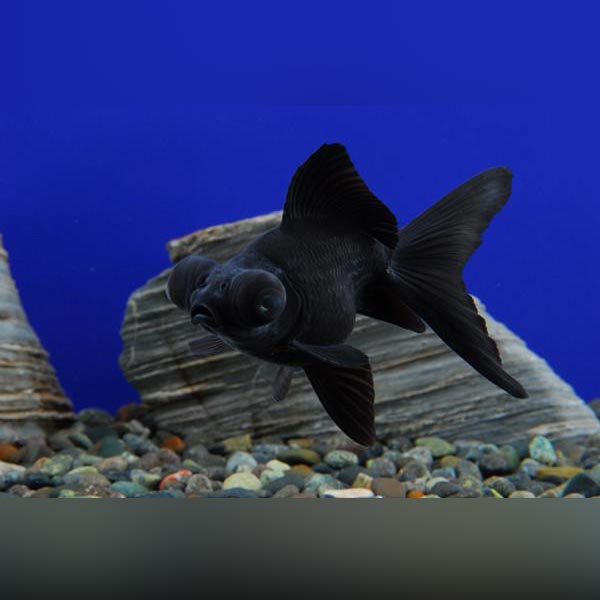
The Black Moor got its name from the Japanese, who refined this breed and traded with… well… black Moors from Northern Africa. These fish were also referred to as black dragons, but are now only referred to as the Black Moor. This goldfish is nearly the same fish as a solid black telescope goldfish, but with slightly less protruding eyes, so this fish is a bit hardier and has a bit better eyesight than telescope-eye and celestial-eye goldfish. Black Moors are pretty fish in the aquarium or pond and do not get quite as big as some of the other fancy goldfish.
Quick Facts
| Scientific Name | Carassius auratus |
| Origin | China (refined in Japan) |
| Care Level | Easy, good for beginners |
| Temperament | Peaceful |
| Adult Size | Up to 6" |
| Lifespan | 10–15 years, often longer with good care |
| Diet | Omnivore |
| Water Temperature | 65–75°F (no heater needed in most homes) |
| pH | 7.0–8.0 |
| Shipping Size | Medium: approx. 2" · Large: approx. 3" |
Care Guide
Tank setup: Black Moors produce a lot of waste, so give them plenty of room and a strong filter. Use smooth decorations, rounded rocks and live or silk plants, because sharp edges can injure their protruding eyes.
Feeding: Feed small amounts of a quality sinking pellet or flake once or twice a day, only as much as they eat in a couple of minutes. Sinking foods are easier for them to find than floating ones. They also enjoy frozen foods like bloodworms and brine shrimp.
Tankmates: Keep them with other slow-swimming fancy goldfish, such as telescopes, orandas, ryukins and ranchus. Avoid fast single-tail goldfish like comets and shubunkins, which will outcompete them for food. Also avoid tropical fish, which need warmer water, and fin-nippers.
Ponds: Black Moors do well in ponds in mild climates. Shallow ponds with very cold winters aren't a good fit, and they're best kept away from fast, aggressive pond fish.
Good to know: Some Black Moors slowly turn bronze or orange as they age, especially in warmer water. This is normal and not a sign of illness.
Share
